Is Your Smartphone Killing Your Business?

Your iPhone, Android or Blackberry smartphone is a great device, enabling today’s business leader to constantly be in contact with the office and access the Internet or the cloud for needed information on the fly.

Unfortunately, it is exactly this constant contact and easy access to the Internet, apps, and countless games that all too often overwhelm the positives and make these devices harmful to the leader’s business and life.

Why?

1.  Being in constant contact leads to a triumph of the urgent over the important. With the E-Mails rolling in and the Internet so accessible, it is easy to spend too much time responding to trivial matters or checking the news, stocks or sports scores. The constant interruptions and the ease of distraction all but eliminate the quiet time business leaders need to think about their businesses in the medium and long term. Continue reading

Posted in Leadership, Perform / Execution | Tagged , , , | Leave a comment

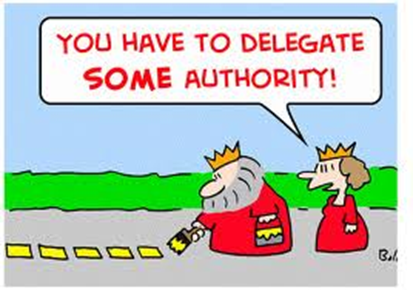
The Lost Skill of Delegation

“You cannot do it all.”

As business leaders, most of us have come to realize that we need to better delegate tasks so that we can get what is essential done.

But, it is important to remember that the purpose of delegation is not to make the life of the leader easier. And it is not to take some task (that the leader hates doing) off of the leader’s plate and dump it on the plate of an already over-worked subordinate.

Instead, the goal of delegation is to divide and conquer the most important tasks for the business so that they get done most effectively and the business moves forward.

As such, the keys to delegation are: Continue reading

Posted in Leadership, Perform / Execution | Tagged , , , , , | 3 Comments

Get Out of the Office and Get Your Business Growing in 3 Days

With the weak economy and the grid-locked government, many business leaders feel stuck, frustrated and frozen in place. They know that their current strategy of downsizing, economizing and streamlining will not lead to long-term success.

In fact, in a recent survey, the number one issue among business leaders and business owners was no longer cost reduction (the “champion” of the past several years). Instead, business leaders fretted about weak sales.

Alas, many of these same leaders are unsure of how they can find new sales, grow their businesses and move forward, especially with consumer and business demand so muted.

What to do?

These leaders need to get out of their offices and personally conduct 3 days of field research to better understand their businesses and see their companies through the eyes of their customers. Continue reading

Posted in Growth and Strategy, Leadership | Tagged , , , , , | 1 Comment

The 4 Secrets to Great Business Leadership Already Known by the Ancients


Thousands of years ago, in Ancient Greece and Ancient Rome, individuals like Socrates, Aristotle, Marcus Aurelius and Seneca aspired to lead virtuous lives by following the four ideals of:

  1. Wisdom
  2. Justice
  3. Self-Control
  4. Courage

Today, these same four qualities still represent the ideal characteristics of a great business leader. Alas, such great business leaders, such virtuous men and women, are as rare today as they were in the time of the Parthenon and the Coliseum. Continue reading

Posted in Leadership | Tagged , , , , , | 1 Comment

Leadership Delusion: The 25 Lies Crappy Business Leaders Tell Themselves

The worst thing about bad business leaders is that they genuinely believe that they are doing excellent work. Yes, they may realize that their companies are not performing. But in their minds, it is not their leadership. It is the economy, stupid competitors, the government and regulation, the weather, their customers, their weak employees, etc.

Such leaders need a cold splash of reality. It is all about their leadership. Over the medium to long term, if a company falters, it is the fault and responsibility of the leadership.

In short, most leaders of under-performing companies are simply deluding themselves. So what are the most common lies that these ineffective leaders repeat to themselves on a daily, weekly, monthly basis to maintain their fantasy?

  1. I am ethical and honest; I mean well; and my team knows this.
  2. We value open communication and everyone’s viewpoint in this company. Continue reading
Posted in Leadership | Tagged , , , | Leave a comment

The Most Seductive and Dangerous Mistake Smart Leaders Make

Business leaders are on the firing line, making it happen, and trying to realize ever more difficult goals. Far too often, for every one step forward, they take one, two or three steps backwards by making that most seductive and dangerous of mistakes: they lose focus.

Losing Focus

As leaders, we are best able to realize challenging goals through a continuous, unrelenting focus on the most important 3 – 5 goals and priorities.

Unfortunately, we are being bombarded with data, information, suggestions, programs, initiatives, ideas, and issues. With all that input, lists of priorities and goals grow to 10, 12, even fifteen. I have even seen one $20M company that had a formal list of 26 programs and initiatives they were working on.

It is devilishly tricky to keep the required focus. We have all heard the lines:

  • “… and just one more thing…”
  • “You can get it done quickly; it is not a big deal.”
  • “Everything is an “A” priority because everything is important.”

But, the sad reality is that no individual and no company has the attention span, time and ability to properly focus on more than 3 – 5 key priorities at any one time.

____________

“Too many priorities mean no priorities.”

____________

The challenging part for us as leaders is that each goal, each priority, each initiative, in and of itself, is good, useful and may absolutely be necessary. Unfortunately, when combined together, all these good things become too much and unmanageable.

In his book, How the Mighty Fall, Jim Collins discusses exactly this issue. For him, the second stage of decline in dying companies is “the undisciplined pursuit of more.” These failing companies are trying to do everything possible to correct their increasing weakness and irrelevance in the marketplace. But, this “pursuit of more” just weakens the company further, diffusing the leadership and company focus away from the essential parts of the business.

It’s Gotta Hurt

In order to keep the focus, we have to limit our goals and priorities to the vital 3 – 5. Then, we accomplish them. Then, we establish the next essential 3 – 5 goals. It is easy to do in theory. It is easy to write about. In reality, however, it hurts. We have to make tough decisions to not do something that can be useful in order to focus on more important goals. What gets excluded might be the cherished goal of a senior manager, or it might be the most important priority of a senior staff person. Still, if it is not one of the vital 3 – 5, it needs to be cut.

  • “But, we are leaving something on the table.”
  • “You are under-estimating our team. We can do it all; we just will work harder.”
  • “All these priorities need to be done.”

All these may be true. But the over-riding goal of the best leaders remains the same: focus on fewer in order to get more done.


Posted in Leadership, Perform / Execution, Personal Success | Tagged , , , , , , | Leave a comment

Go Home!!! Work Fewer Hours and Get Better Results

Business leaders pride themselves on working hard, putting in the long hours required to achieve success. Paradoxically, the extra hours many of us put in may actually hinder our effectiveness and the performance of our companies. In short, working fewer hours can make us better leaders and improve our company’s results.

Why?

1.  Better and Clearer Thinking: First, limiting our hours and taking at least one weekend day off gives us the opportunity to think. Similar to sleep, it gives our brains the time to process and decipher all the inputs and create new ideas, connections, and neural pathways. Second, by stepping back from our work we get ourselves out of the trenches and see the broader view. Instead of flying and darting over hills and valleys at 1,000 feet of altitude, this stepping back allows us to cruise at 35,000 feet, surveying the landscape and seeing the big picture. This can ensure that we move the business forward in the right direction. Third, working fewer hours reduces our level of stress. High levels of stress deplete our mental capacity and diminish our judgment.
 
2.  Extra Hours Encourage a Pattern of Inefficiency: Few of us work a non-stop, solid eight hour day. Instead, we divert ourselves with the Internet, unimportant tasks, non-work activity, gossip and innumerable other distractions that suck up time and thus require us to stay at the office for the face-saving 10, 11, or 12 hours a day. By setting a time limit on our work day (say 8 or, at most, 9 hours), we can force ourselves to get done in that time frame what needs to be done. We can thus make every day as efficient and productive as that day before vacation when we cram and successfully get it all completed. By respecting this time limit even when we have not finished everything, we will ensure that the next day we will work more effectively right from the start. Rather than getting bogged down and off track, we will get right to work on the most important issue without hesitation, without procrastination, without distraction.

3.  Requires a Focus on the Important: By limiting the number of hours worked, we also require ourselves and our company to focus only on the essential. We do not have the time in the day to focus on non-essential or “nice to have” goals or activities. In most cases, we are trying to do too much ourselves and dumping too much on our poor team members – additional reports, initiatives, and programs. With all these priorities, we, inevitably, lose our focus on the most important 3 -5 goals for the business. Perhaps, some of us are thinking:
If I remember to focus on the important and then put in the extra hours then I can make progress towards my goals even quicker. Win win.
No!  The limiting factor in business is not time, it is attention. Our attention spans are limited and we can only grasp so much (3 – 5 priorities). Further, study after study has shown that after a solid 8 or 9 hours of work, our effectiveness, our ability to focus, and our attention to detail drops off precipitously. In effect, after this time, most of us are wasting our time by continuing to work. Instead of staying in the office, burning the midnight oil and heroically grinding it out, we just need to “Go Home!”


Conclusion

By working fewer hours, we will think more clearly and broadly, work more efficiently and effectively, and force ourselves to focus our attention on the most important. And oh yeah!! It just might help us get some work-life balance back into our week.

Posted in Leadership, Personal Success | Tagged , , , , , | 1 Comment

Team With Your Customers

A previous blog discussed the first two ways to turn your current satisfied customers into your biggest allies and best friends.

  1. Survey and satisfy these customers.
  2. Truly listen to them.

The third way to develop customers as allies is to team with them to develop additional products and services beneficial to both the customer and you.

Team with Your Customers

Once a customer realizes that your company is an excellent and reliable supplier, they will often want to team with you in refining current products and services or in solving new problems that they may be facing.  Teaming together has two benefits.

  1. It ties you together more closely.
  2. It gives you an improved product or a new product line that you likely can (with minor revisions) sell to other customers.

Initially, you may be donating your time and expertise.  Think of it as a quid pro quo to increase your visibility and tighten your relationship with the customer.  But, over time and as the cost of the development increases, most good companies will commit funds to help you defray the development expenses.  When the product development or refinement becomes successful, you will have significantly enhanced your relationship with that core customer.  Further, even if the customer cannot sole source, any resulting specification will be written around your design putting you in the driver seat to win the work.

Three objections that you may have:

1.     My customers never want to do this.  Have you asked them how you can improve the product and service that you supply?  Have you offered to team up with them?

2.  My customers do not want to team with us.  If they want to team with a competitor, then, most likely, that competitor has a superior relationship with that customer.

3.  My customers want me to pay all the expenses.  If the product improvements and refinements are something that the customer really values, then they will begin to pay for it.  If they do not want to pay at all, you should evaluate whether it makes sense to continue.  Sometimes, the threat of you stopping work is enough to get the customer to commit some money.  Other times, I have seen where your development work with a customer just becomes a pet project of some staffer within the customer company to justify his or her job.  It is vital to identify this and cut the cords before the project becomes a sink hole of time and money.

In one year, my division worked with customers in the wireless, cable television, environmental, and the alternative energy markets on new product development and product enhancements.  In each case, the customers paid their fair share of the expenses and committed significant time towards the project. Within two years, these new or refined products and services had sales reaching $10M annually. 

Alas, at the same time, we began a project in the Homeland Security area where we were never paid and reimbursed.  Eighteen months later, far too late, we pulled the plug on this project.  Later, we learned that we had never been considered more than an alternative to allow the customer to have the legally required three bidders even though they knew who they were going to choose all along.  We learned an expensive and time-consuming lesson.  In most cases, if the customer will not contribute money, the project is just not important enough to them.

This blog is an excerpt from David Shedd’s recently published book, Build a Better B2B Business: Winning Leadership for Your Business-to-Business Company, now available on Amazon.com.

Posted in Growth and Strategy, Sales and Marketing | Tagged , , , | Leave a comment

Turn Your Current Customers into Your Allies for Growth

Face Reality: Most companies in most industries will not discover the “silver bullet”, the “magic elixir” that returns them to the exciting growth track of the past. As Yogi Berra said:

The future ain’t going be what it used to be.

Instead, growth will come from serving current customers better and (as a Bain and Company study found) “finding profitable opportunities within the boundaries of current operations.”

Thus, your most likely success strategy will come from growing outward from your current customer base. To do this, you need to turn your current satisfied customers into your biggest allies and best friends.

How??

1. Survey them

2. Listen to them

3. Team with them

1. Survey Your Customers

Institute a simple customer satisfaction survey. GE and others have used a two question customer satisfaction survey with success:

1. On a scale of 0 – 10, how likely are you to recommend this supplier to other people?

a. 0 – 3: Negative

b. 4 – 7: Neutral

c. 8 – 10: Positive

2. Do you have any comments or suggestions for ways that we can serve you better?

With such a survey, you learn whether your customers are satisfied or not. This can be a yellow warning light to make you aware of problems or of your company’s need to enhance or improve your product or service.

The key is to make this survey or any survey as easy to respond to as possible so that your customers actually respond to your survey request. Alas, many companies try to make it easier for them to collect and collate the survey results while making it harder and thus less likely for the customer to respond. Instead, stick the short survey in an E-Mail and ask the customer to answer the questions and hit the Reply button. Personally, I am glad to respond to a survey like that. It takes me two minutes and I get a chance to share my thoughts. But, I rarely click on a hyperlink to take me to a survey. It takes too much time, and I dread that the survey is going to be 30 questions long.

For those customers who are unsatisfied, follow up and redress the issues raised; make sure that the customers know that you have heard them. For those customers that are very satisfied, ask if you can use them as references or ask for testimonials.

2. Listen to Your Customers

Your current customers are a gold mine of information if you listen to them. If you pay attention they will give you a deeper understanding of their industry and your competitive position as a supplier. They may tell you about:

• Upcoming changes at their companies and other companies in their industry

• Your relative competitive position in the market

• New opportunities in their industry or in other industries

All of this information is invaluable in helping you grow and improve your business. If your salespeople are not getting this feedback, train them how to ask and listen better. Further, as the leader, get out into the field, speak with customers, and get this information yourself.

To be continued next week with Task III (Team with Your Customers)…

This blog is an excerpt from David Shedd’s recently published book, Build a Better B2B Business: Winning Leadership for Your Business-to-Business Company, now available on Amazon.com.

Posted in Growth and Strategy, Sales and Marketing | Tagged , , , , | Leave a comment

Speed – A Key Element of Business Success

“The secret to success lies in careful preparation followed by speedy and decisive execution.” 

Napoleon

In successfully executing on your business goals, speed matters.

  • The quicker that you complete a task, the sooner you can get on to the next task.
  • The quicker that you respond back to a customer, the more likely you are to win their trust and their business.

So, how can you speed up what gets done?

1.  Get to the Point:Get started on things immediately.  Don’t waste time even considering procrastinating.  Once something is started, move on it.  In conversations and work, get to the point cutting down on chit chat and get right to business.  To facilitate getting to the point, ensure that you understand the nature of the problem or issue.  I have often seen people procrastinate because a task appears to be difficult.  Only when they had completed the task did they realize how quick and easy it was.  So, skim through the report, the presentation, or the work assignment and then determine how long it will take to get done.  Then, either get it done immediately or set up a block of time to get it done in one fell swoop. Finally, getting to the point creates a sense of urgency in all that you do.  With this urgency come momentum and the expectation that you will work more quickly and more ruthlessly to get things done. As Machiavelli once said:

The wise man does at once what the fool does finally.

2.  Keep Short Deadlines: Not everything is perfect in business.  Nor does it need to be. It is often true that to complete a task or respond back to someone at a 90% correct level may take only a few minutes, whereas to respond back at a 98% – 100% correct level may take 5 days.  Err on the side of the few minute answer.  To get things done within the few minutes, create short deadlines; this forces your team to prioritize and focus on only the most important issues.  Further, to assist in keeping short deadlines, reduce the task.  For example, if you have a meeting, require that the meeting notes be completed by the end of the day and require that they be at most one page.  This is a double win: the task is completed punctually and the notes focus only on the essential.  Likewise, keep short deadlines on meetings and stick to those deadlines.  Wal-Mart CEO Mike Duke is known for walking out of meetings at the end time even in the middle of a discussion.  By sticking to and respecting these short meeting times, it ensures that the next meeting will be more productive especially at the outset when many meetings often get bogged down and off track.  It is good to remember the words of General George Patton:

Perfection is the enemy of the good.  By this, I mean that a good plan executed with great vigor now is better than a perfect plan next week.  Success is a very simple thing; and the determining characteristics are confidence, speed and audacity – none of which can ever be perfect, but they can be good.

3.  Think Critical Path: Thinking of the critical path helps to speed all activities along.  Critical path is a project management technique that looks at the time element for each required step to complete a goal.  It then strives to shorten the time to accomplish a goal by performing the steps rapidly and in parallel, wherever possible.  To execute rapidly requires that the employees and you as a leader realize what is on the critical path and focus to get those items done as quickly as possible even if some things need to be done out of turn or less efficiently.  Two quick points:

A.  In mastering critical path, it is necessary for management to avoid being the roadblocks as any delayed response or approval inevitably delays the whole project or task.

B.  We each need to realize that our own individual effectiveness and priorities are subordinate to the overall business effectiveness and priorities.  We may have to do a task more inefficiently or earlier in the process than we want in order to ensure that the overall goal is achieved as quickly as possible.

This blog is an excerpt from David Shedd’s recently published book, Build a Better B2B Business: Winning Leadership for Your Business-to-Business Company, now available on Amazon.com.

Posted in Leadership, Perform / Execution, Personal Success | Tagged , , , | Leave a comment

Minimize Distractions for Better Results

In business today, the opportunity for distraction is endless.  This includes all the distractions of the urgent but unimportant that range from meetings to E-Mail to Internet surfing.  Due to these distractions and constant interruptions, employees and companies often do not have solid block of times to get finished what needs to be finished.

Interruptions are particularly pernicious as there is an inescapable setup time for all tasks before you are getting back into full swing.

A “can I have one moment?” interruption will usually last ten to fifteen minutes.  After that, inevitably comes a quick check of the E-Mail and then another ten minutes to get back to working solidly on what you were doing before the interruption.  In short, that “just one minute” interruption took up thirty minutes.  For someone making $100,000 that one minute cost about $25!

1.  Reduce the Transition Time:  Of course, you cannot avoid all distractions. But, when distracted or interrupted, a best practice would be to get back to work as soon as possible.  Work on transitioning quickly without taking breaks or taking quick checks of E-Mail.  In the above case, with a focus on the transition and not checking the E-Mail, perhaps, the person could have been back to work in only twelve minutes reducing the cost of the interruption to only $10.  Transitioning quickly also helps prevent procrastination from creeping in.

2.  Batch Your Work: Create one hour blocks of quiet times (allowing for interruptions in the case of true emergencies), where the E-Mail system is shut down, the phone is turned off, and you are dedicated to the most important tasks.   On a company level, attack the most important action item in one fell swoop and get it fully and completely done.  Create time blocks where the routine, unimportant yet necessary tasks can be completed.  Ideally, these would be at times when your concentration is weakest; usually, right before lunch or at the end of the day.

3.  Define Fewer Things as Urgent: With fewer urgent items, you can often reduce five “quick one minute” calls to one call about all five issues.  Related to this, it is important to realize that what is urgent for you may not be urgent for the other person or the business as a whole.

4.  Consciously Ignore: Individual employees and companies need to consciously make the effort to ignore much of the information and stimulation in the environment.  Not every tidbit of information and everything that you are curious about needs your attention.

5.  Learn to Say “No”: Master the art of refusal and learn to say “no.”  Darren Hardy, the publisher of Success magazine, offers a story about Richard Branson and his ability to say “No” in order to focus on the important.

A while back, after our Success cover feature with the knighted Sir Richard Branson, we had a client contact us to inquire about hiring Richard Branson to speak at their conference.  So, we had someone inquire and Sir Richard declined.  The client then offered $250,000 for an hour talk; Sir Richard declined.  They then raised it to $500,000. Sir Richard declined.  Then we asked how much it WOULD take to get Sir Richard to attend.  The response from his people was, “no amount of money would matter.”  They said, “Right now Richard has three main priorities he is focused on and he will only allocate his time to those three priorities, and speaking for a fee is not one of them.”

This blog is an excerpt from David Shedd’s recently published book, Build a Better B2B Business: Winning Leadership for Your Business-to-Business Company, now available on Amazon.com.

Posted in Leadership, Perform / Execution, Personal Success | Tagged , , , , , | Leave a comment

Why is Business Today So Complex?

Everything and everyone in business drive business leaders and businesses towards greater and greater complexity and more and more work. As Warren Buffett has said:

There seems to be some perverse human characteristic that likes to make easy things difficult.


But, Why? Why are companies and business leaders stuck in the “Complexity Trap?”

  1. Shooting for Perfection: Companies have an unending passion to be the best in class in everything that the company does. We have all heard the words: World Class, Stretch Goals, BHAG’s (Big Hairy Audacious Goals). Alas, in shooting for this perfection many companies undertake a complex project or initiative that the company is just incapable of successfully completing. In using the analogy of baseball, the company is trying to go directly to third base before they are even out of the batter’s box.


  2. Complexity Sells: Many critical issues in business can just be solved by direct focus on the root cause and expert leadership to follow the simple steps to realize the goal. But, that is nowhere near as sexy as bringing in the latest high-powered consultants or implementing the hottest, newest, and most intellectually rigorous “business solution.” Unfortunately, top management often forgets the difficulty for the people on the front line to implement the complex solution and live with it on a daily basis.


  3. American Culture / American Dream: There is a real American trait that lauds those who achieve success through sheer hard work. With this comes the overwhelming belief that the harder you work the more you will get done the better you will make your business. If some is good, then more is better. Alas, this trait often leads to excess and superfluous work to ensure that everyone is busy and working their hardest. The question that is rarely asked is whether all the extra work is justified by improved business performance.


  4. Bias for Action: Business leaders today are driven and love to work hard. With that comes a passion for getting things done or making it happen. As a result, business leaders have a real bias for action. If there is nothing to be done, many times they will find something to do and then do it or (better yet) delegate and insist that it gets done by their team. What leaders with this bias for action may not realize is that any action they take is multiplied ten to fifty times further down in the organization as the people to whom the task was delegated strive to satisfy the request or initiative while still doing all their other work.


Business success does not come from more work or more complexity. Rather, success comes from keeping things simple and focusing relentlessly on the few critical issues that need to be resolved to drive the success of the business. To overcome the complexity trap, the watchwords need to be: simplify, eliminate, prioritize and focus.


This blog is an excerpt from David Shedd’s recently published book, Build a Better B2B Business: Winning Leadership for Your Business-to-Business Company, now available on Amazon.com.

Posted in Business Acumen, Leadership | Tagged , , , , | 4 Comments

Introducing – Build a Better B2B Business


My book, Build a Better B2B Business: Winning Leadership for Your Business-to-Business Company, is now available for sale on Amazon.com (Click Here).

The book offers a simple, focused, and practical approach to business leadership.

Today, business and business leadership are far too complex. Most business leaders have too much going on and are overwhelmed with information, initiatives, programs, E-mails, and meetings. As a result, we all work too hard, yet the important often does not get done.

In the book I argue that to be successful, it is vital to simplify and focus only on the few key fundamentals that drive the success of your business.

  1. Eliminate the complexity.
  2. Eliminate the useless effort.
  3. It is better to do nothing than to do the wrong thing.
  4. Simplify. Eliminate. Prioritize. Focus.

In short, simplify and focus on the fundamentals of

  1. Do the Right Thing: Build an ethical organization aligned to tackle the three critical issues that the business is facing.
  2. Winning Teamwork: Create an engaged and accountable team that executes on the business goals.
  3. Customer Service: Develop a customer service culture that exceeds the expectations of current customers and allows for profitable growth.

The book is full of examples and anecdotes from my experience having overseen a total of 19 different B2B businesses in my time as a Division President. Most importantly, the book is honest and candid. As such, you will enjoy reading anecdotes that highlight the times that I made mistakes or did something wrong or embarrassing. To paraphrase the Dalai Lama, I hope that from my losses “you will not lose the lesson.”

Further, the book is chock full of quotes from a wide variety of individuals across the ages. These include:

  1. Historical figures such as the Napoleon, Goethe, Pope John XXIII, and (of course) the Dalai Lama.
  2. Business leaders such as Warren Buffett, Lou Gerstner, and Jack Welch
  3. Business thinkers such as Peter Drucker, Jim Collins, and Ken Blanchard
  4. People I know personally

The quotes and anecdotes support the arguments I make about focusing on the fundamentals. But more importantly, the examples and quotes point out that successful business leadership in twenty-first century America has much in common with successful leadership throughout history. Leadership does not need to be re-invented or re-discovered. It just needs to be practiced by committed leaders on a daily, weekly, monthly, yearly basis.

Further, I believe that we can all learn from each other’s best practices. The insight into and practice of successful leadership is not just the preserve of a few wildly successful individuals, it is everywhere leaders create long-term successful businesses, be they $10 million, $300 million, or $30 billion in sales.

I encourage you to read Build a Better B2B Business: Winning Leadership for Your Business-to-Business Company. O.K. I am biased. Nevertheless, I am certain that it will give you insights into how you can be a better leader and make your business a more successful business.

I look forward to your thoughts, comments, critiques, and views on the book. You may contact me at davidshedd@cox.net.

Thank you.

Posted in Business Acumen, Leadership | Tagged , , , , , | Leave a comment

How to Grow Your Business in Five Steps

Growth is a pre-requisite for business success. In today’s rapidly changing business environment, most companies need to grow just to stay in place. They need to expand market share, seek out related and new market opportunities, and constantly pursue new customers just to stay even over the long haul.

To grow successfully, businesses need to build upon their success with current customer and grow outward from there. As such, the five steps to business growth are:

  1. Satisfy Your Current Customers: As discussed in 8 Steps to Satisfy Your Current Customers and Re-Charge Growth, the first step for business growth is to exceed the expectations of current customers. This reduces your customer turnover (churn), which means that you no longer have to find new customers just to replace current customers that have stopped buying from you due to poor service. Further, satisfying your current customers allows you to increase your share of wallet with them.


  2. Increase Your Market Share in Your Current Market Space: Increase your overall market share with your current product line in your current market space. Satisfying your current customers strengthens your brand and proves that you live up to your brand promise. Building on this strong brand and referrals from your good customers, viral market out and penetrate new customers in your current market space.


  3. Work with Current Customers to Determine New Product and Service Opportunities: Your best customers realize that you are an excellent and reliable supplier. Especially, with B2B (business-to-business) customers, these good customers will often invite you to help them in other related parts of their business where they may be having issues. They may also want your help to refine current products and services or to solve new problems that they may be facing. Pursue these potential opportunities aggressively, as they will bind you closer to these best customers and point the way to new product and service offerings that can then be offered to your entire customer base.


  4. Pursue Market Opportunities Already Under Your Nose: Be easy to do business with and open to the potential customers that are contacting you today looking for help to solve their problems: You Don’t Know Me; But, I Want to Give You Money! In addition, follow up with and learn more about the newest customers that are buying from you. Why do they now need your products and services? Is this a trend? Are there other companies in their same market space that now need your products and services as well?


  5. Actively Pursue New Products and Market Opportunities: This is the proactive part of growth and business development. It includes seeking out growing and profitable markets, solving customer’s problems, and finding new market niches where your company can have a sustainable competitive advantage. This can include all the sexy stuff that they teach about in business schools: new product development, market entry strategies, joint ventures and acquisitions. While undeniably important, beware!! The active pursuit of new product and market opportunities is just one out of five steps to business growth; to grow your business successfully requires using all five steps to business growth. As sales and innovation strategist David Cooke says well:

    All too often businesses over-emphasize the importance of new customer sales as a key to building a business. While this is and continues to be an integral component of business growth, real and sustainable growth occurs when a business leverages its relationships–team, customer, suppliers, ownership–in a strategically focused manner to retain and expand the ones it already has.

Posted in Growth and Strategy, Sales and Marketing | Tagged , , , , | Leave a comment

Three Keys to Communication

As business leaders, much of our time is spent in communicating:

  1. Conveying our business goals and direction
  2. Reinforcing our values
  3. Following up
  4. Teaching and training our team

Unfortunately, due to poor communication skills on our part, the distractions of relationships, environment and culture, and poor listening skills on the part of our audience, communication is (in general) only 30% effective. 

So, what can we do to raise the effectiveness level of our communication?

1.    Keep the Message Simple (KISS) – Less is More!

The average person can remember at most three to five items at a time.  Communicating any more than that will ensure incomplete and ineffective communication.  As such, the burden is on the speaker to put significant thought into the three to five points that he or she is trying to convey and to organize these thoughts in a succinct and well-organized way.  We need to be specific and use terms and language that the audience will understand (think eighth-grade language).  Finally, in communicating the three points, we should consider telling stories.  Stories resonate; they are more easily understood and remembered.  Even better; stories are re-told.

 2.     Practice the Rule of Ten

A new concept or idea may need to be communicated as many as ten times before being internalized by the audience.   As the leader, this requires that we promote daily, weekly, monthly communication.  This includes communicating the values and the goals of the business and the expectations for each individual.  In doing this, we should consistently communicate the progress towards the goals: how far the individual or team has come and the remaining gap between the current reality and the goal.  To effectively use this Rule of Ten, all but requires that we keep our message simple and limited to three to five points.

3.    Make Clarifying and Confirming a Habit

To ensure complete and mutual understanding requires that the other person to whom we are communicating summarizes the major points of the discussion.  In many cases, the listener will not have understood the points.   But, unless we follow up directly, they will generally not ask for clarification.  This is especially true in cultures where any sign of weakness can be considered a loss of face and where there may be language difficulties. Some suggestions on clarifying and communicating in daily business:

    1. Summarize.  In one-to-one communication, we should have the person to whom we are communicating summarize the major ideas of a discussion.  Simply asking: “Do you understand?” is not enough as the answer will inevitably come back: “Yes.”
    2. Document in Writing.  After summarizing, we should follow-up with a written summary of the communication.  For meetings, meeting notes should be written up with specific assignments and deadlines. 
    3. Follow Up. We need to plan and document the follow up… and then do it.


While simple, these three keys of communication are often forgotten in our haste to move on to the next issue.  But, unless done effectively, the communication will not effectively take place.  In all our communication, we should judge ourselves against the high standard that legendary football coach Vince Lombardi had for his communications:

Communication doesn’t take place until your people: hear or see what you say; understand it; believe it; believe you mean it; remember it; internalize it; and begin to use it themselves.


Posted in Communication, Team / People | Tagged , , , | 2 Comments

9 Keys to Driving Cultural Change

After years of little growth, command and control management, and cost-cutting, the cultures of many organizations need rejuvenating and tweaking in order to thrive in today’s difficult and increasingly competitive business environment.

But, changing culture is difficult. As Lou Gerstner, former CEO of IBM, wrote:

The hardest part of a business transformation is changing the culture – the mindset and instincts of the people in the company.

So, what are the keys to drive cultural change? Continue reading

Posted in Improve / Turnaround, Team / People | Tagged , , , , , | 1 Comment

3 Areas Where Consistency from the Business Leader is Critical


One of the keys to good leadership is to be consistent:

  1. Consistent focus on the few critical issues.
  2. Consistent mood, behavior, and decision-making so that your team knows where you are coming from.
  3. Consistent delivery, brand image and presence with the customer.

As George Bradt, a consultant in leadership on-boarding, has said:

Consistency is a trust builder. Inconsistency is jarring.


1.  Consistent focus on the few critical issues
As a leader you want to communicate a consistent focus on just a few critical issues (at most 3 – 5) for each employee or team. And then you want to relentlessly follow up and focus only on those few issues.

Less is more.

First, remain consistent with prior commitments. One of the most demoralizing and exhausting aspects of business is the wasted time, attention and effort on initiatives or programs that are hot and heavy for a few weeks or a few months and then ignored as leaders move onto the next “sexy” idea. If you have committed to a course of action, be consistent and follow-up, seeing it to its end.

Second, being consistent requires that you stay on message, even if that means overlooking trivial problems, no matter how annoying or “easy to fix.” Above all else, you need to focus your attention on the few critical issues. As a Division President visiting a business, I would often come up with 15 – 20 items that needed to be fixed, changed, or easily improved. It was a real struggle to force myself to ignore many of these to focus my attention and the attention of the leadership team of the business on just the 3 – 5 critical issues. But, without this consistent focus, the business would change priorities constantly and soon lose its way.

2.  Consistent moods, behavior, and decision-making so that your team knows where you are coming from
A September 2010 Harvard Business Review panel session discussed the biggest mistakes that a leader can make. One of the most important was being inconsistent – inconsistent in mood, inconsistent in behavior, inconsistent in how a leader makes decisions. This inconsistency breeds fear and uncertainty throughout the business as each employee wonders:

Which one is coming in to the office today?

Will it be the somber, reflective leader? Will it be the passionate go-getter? Will it be the dead fish? Will it be the angry, bitter boss?

A leader is always on stage and needs to show the same positive and consistent face to his or her audience (the team). Of course, this is hard to do when it has been a truly rotten morning. But it is necessary, in order to avoid outbursts of anger, mixed messages, or other destructive and morale-sapping leadership behavior.

3.  Consistent delivery, brand image and presence with the customer.
To build your business, you must first consistently deliver value to your customers. The simple adage of “do what you say” goes a long way as most customers are accustomed to broken promises and poor service. With consistent delivery and consistent service, you can then focus on promoting a positive and consistent brand image with the customer.

As Howard Fluhr, Chairman of the Segal Companies, has said:

Your communication [to your team and to your customer] must be clear, consistent and repetitive over time.

Be consistent in your brand message, your advertising, and your market presence. Common or rapid changes in your message and image distract the customer and prevent them from forming and strengthening an image of your company in their mind. Your consistent performance, message, and presence with the customer (through regular sales calls and interaction) boosts credibility and awareness of your business, what it stands for, and what it can do to help solve the customer’s problems.

Posted in Leadership | Tagged , , , , | Leave a comment

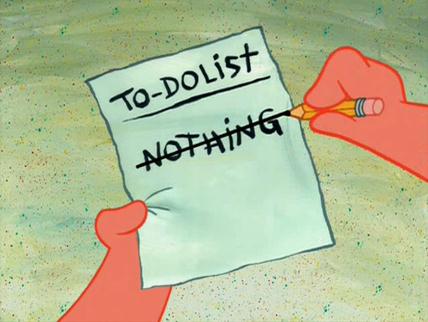
6 Ways A Leader Wins by Doing Nothing

“Just Do it”

“Make it happen”

“Be a Doer”

So much of leadership is about getting things done and accomplishing goals. As such, business leaders are often fixated by activity, motion, and action. The more that is done the better.

As a leader, however, there are times when it is best to do nothing.

  1. By doing nothing, the leader can maintain the business focus on the important goals.
  2. By doing nothing, the leader can develop the autonomy and accountability of the team.
  3. By doing nothing, the leader can better listen and understand what is going on in the business.

As Tim Ferris writes in his book, The 4-Hour Workweek:

“Not-to-do” lists are often more effective than to-do lists for upgrading performance. The reason is simple: what you don’t do determines what you can do.


But, doing nothing is incredibly hard for most action-oriented leaders. To help out, I suggest some areas where leaders should force themselves to do less or do nothing.

  1. Talking: By stopping our constant talking, we force ourselves to listen and hear what the other person has to say. Especially debilitative are the times when we leaders must get the last word in. We need to struggle and restrain ourselves from doing so. Instead, we can let the ideas of our team carry the day without our interjection or seal of approval. It will be their decision for which they are then accountable.


  2. Correcting: It is difficult for many of us to realize that not everything needs to be perfect and that not everything needs to be fixed right now. It is preferable to purposely ignore trivial mistakes. By correcting errors or focusing on issues that are not critical, the leader deflects the team’s attention away from the vital few towards the trivial many. As Pope John XXIII commented, a leader should…

    See everything; overlook a great deal; correct a little.

  3. Satisfying Our Curiosity: Today especially, we are all overwhelmed with endless distractions. Many of us who are over 35 have grown up in an age of relative information scarcity. Now that there is information overload, we often indulge ourselves by following up on all pieces of information in order to satiate our curiosity and satisfy our hunger for information or knowledge. We have become informationally obese. To slim down, resist the curiosity pangs and do nothing. We need to ask ourselves:

    How will reading the morning paper in detail change our lives?

    What chance is there that the next website or blog has deep and relevant insight?

    Much of the information that we encounter is irrelevant to our lives and possibly disruptive to our well-being. Following up on it all inevitably leads to wasted time, distraction, and the accumulation of additional facts and/or tidbits, but without additional understanding.

  4. Initiatives: Most established businesses already have enough going on to completely drown the workers on the front line. I have seen countless small business units facing onslaughts of 10, 20, even 26 corporate initiatives that the team is tasked to fulfill. Stop the madness! While each initiative can likely be justified as necessary, is it really vitally important that they all be done at this time? If you have to undertake a new initiative, then cancel or postpone 1 or 2 on-going programs to give your team the time and breathing space to get the new initiative done correctly.


  5. New Business Development: As with the overload of new initiatives, many businesses are focusing on far too many new business or market areas. The key to effective business development is to first ensure that you are executing on your current business and satisfying your current customers. The second key is to focus on just the few highest potential new business or market areas. As Peter Drucker and countless business strategists have screamed:

    The most important and difficult part of strategy is deciding what not to do.


  6. Working All the Time: Especially here in the U.S., there is a point of pride in always being busy and working. Still, the constant 24 / 7 / 52 dedication to the job often hinders performance and most certainly destroys work-life balance. Instead, we should set up guidelines to not work or even surf the internet after a certain hour in the evening and for at least one day a week. We will sleep better, relax, and re-charge the batteries. For us workaholics, this will be the hardest test of our ability to do nothing. To be untethered from the computer, the smart phone, and the office for a whole day will likely bring on withdrawal symptoms and cravings to check the Internet or the E-Mail. Resist resist resist. When we get back to work, we will realize that we really did not miss anything that earth-shattering; the show did go on. And we may also have realized how pleasant it was to spend a whole day fully engaged with family and friends, doing nothing special.

    Dolce Far Niente (The Sweetness of Doing Nothing)

Posted in Leadership, Personal Success | Tagged , , , | 2 Comments

Humility – A Leadership Attribute Throughout the Ages


One of the most difficult challenges for any leader is to remain humble in light of the success that the leader has achieved.  Our business success inevitably leads to greater self-confidence, especially as we inevitably over-estimate our personal role in that business success.  As Bill Gates said well:

Success is a lousy teacher.  It seduces smart people into thinking they cannot lose.


What is Humility?

Humility is the personal honesty that you, as the leader, do not know everything and do not have all the answers.  Humility enables you to question people’s flattery, to admit your mistakes and weaknesses, and to be more open to other’s opinions and challenges to your viewpoints.  It is certainly not a coincidence that in Good to Great, Jim Collins identifies the characteristics of the best leaders as possessing:

A paradoxical blend of personal humility and professional will.


Humility and Ego

In his book, What Got You Here Won’t Get You There, Marshall Goldsmith defines 21 weaknesses in leadership behavior that he characterizes as “stupid things top leaders do that they need to stop doing now.”  The root cause of virtually all of these behaviors is the ego of the leader:

1.  The ego that tells the leader that he knows everything and is always right.  As Yogi Berra said:

There are some people who, if they don’t already know, you can’t tell them.

2.  The ego that tells the leader that she is better than the others who are subordinate. 

3.  The ego that tells the leader that he does not need to play by the roles.

Through these behaviors leaders have let their ego prevail and lost their humility.  By contrast, successful business leaders have great self-confidence, but they retain their humility and honesty as they realize that while talented and hard-working, they are not perfect, have been greatly aided by others, and (yes) have just been plain lucky. 


Humility Across the Ages

This question of humility has been a leadership issue for millennia: 

Ancient China:  “The great leader speaks little.  He works without self-interest and leaves no trace.  When all is finished, the people say: ‘we did it ourselves.’”  Lao-Tzu


Ancient Greece:  The Ancient Greeks had a word for the loss of humility and the triumph of the ego: hubris.  Hubris is the outrageous arrogance where a person in power overestimates his or her own competence and capabilities, gradually loses touch with reality, and (in Greek tragedies) succumbs to a tragic fall.

Ancient Rome:  “To conquer one’s spirit, abandon anger, and be modest in victory… whoever can do this I compare not to the greatest of men but to a god.”  Cicero

Mongol World around 1200:  “The key to leadership is self-control: primarily, the mastery of pride, which is more difficult to subdue than a wild lion.”  Genghis Khan 

Louis XIV France: “Louis’s greatest gift was to maintain his quality of common sense in the midst of constant flattery.  Throughout, the king demanded respect and obedience, not flattery.”  Louis XIV biographer, Olivier Bernier 

18th  Century Austria: To keep herself humble and ensure that she did what was right and best for the Austria-Hungarian Empire, the Archduchess Maria Teresa employed one advisor as her official critic.  It was the formal job of Emmanuel Count Sylva-Tarouca to tell Maria Teresa all of her mistakes.

20th Century America: “To possess self-confidence and humility at the same time is called maturity.”  Jack Welch


Conclusion

As a leader, your success comes about from the success of others.  Maintaining humility allows you to better keep your focus where it needs to be, directed outward towards your team and your customers.  As Ken Blanchard said:

People with humility do not think less of themselves; they just think about themselves less.


Posted in Leadership | Tagged , , , , , | Leave a comment

Five Things a Business Leader Should Do Today and Every Day


Successful business leadership depends on the words and ideas that the leader contributes to the organization. But even more significant, is what the business leader does. As Ralph Waldo Emerson once said:

Your actions speak so loudly that I cannot hear what you are saying.

So, what should a business leader do every day to speak so loudly?


1.  Start Out Proactively
How do most of us begin the day? Perhaps, we get a cup of coffee, read through our E-Mails, listen to our voice mails, maybe even read the newspaper or quickly surf the internet for the major news stories. No, No, No, No and No. These are all reactive activities. Instead, begin the day proactively. Pick the most important task that you need to do and do it first thing (even if for only 30 minutes). Get it done or get a good chunk of it done. Then, you can go get that cup of coffee and begin to go through E-Mails confident that you have completed the most important task for the day.

2.  Walk around, talk around – MBWA (Management by Walking Around)
Get out around and among your people, both your direct reports and the employees below the level of your direct reports. Ask them:

What is going right today?

What is going wrong today?

What do you need to do your job better?

Listen to the answers and break down the barriers. Make it easier for them to get their jobs done. Coach. Encourage. Recognize (“find someone doing something right every day”). And thank them for their work. Not only will you motivate, engage and inspire your team, but you will also learn the “true truths” and “real reality” of what is going on in the front lines of your business.

3.  Touch a customer
Customers are the lifeblood of the business; they provide the money that enables the business and you to succeed. So, spend a part of each day with or discussing customers. Visit a customer to help solve a problem or resolve an issue. Call a customer to thank them for their business. Or spend time with the sales and marketing people understanding more about the customer and more about how your company can better serve and solve their problems.

4.  Learn and think
Every day and every way each of us needs to learn something to make us better, more understanding, more aware, more insightful. By all means, read about your industry and competitors. But, also read different ideas and perspectives that might give insight into new and different ways of building and bettering your business. Then, spend the time and think about what you can do to be better and make your business better. Wrapped up in the daily battle and reactively responding to the daily fires, too many business leaders do not take the time to step back and think about what they are doing and how they can do it better. Take some of that downtime in the car, on the plane, before a meeting, and think. Your business will be better for it.

5.  Give good example

In all your interactions every day, show everyone your values, your goals and your priorities. A fundamental requirement of leadership is to be an example and a model of the behaviors and focus that you want throughout your organization. So, show it by what you do every day and how you do it every day. This advice is ageless. As Sir Francis Bacon said four hundred years ago:

He that gives good advice builds with one hand. He that gives good counsel and example builds with both. But he that gives good guidance and bad example builds with one hand and pulls down with the other.

Posted in Leadership, Perform / Execution | Tagged , , , , | Leave a comment