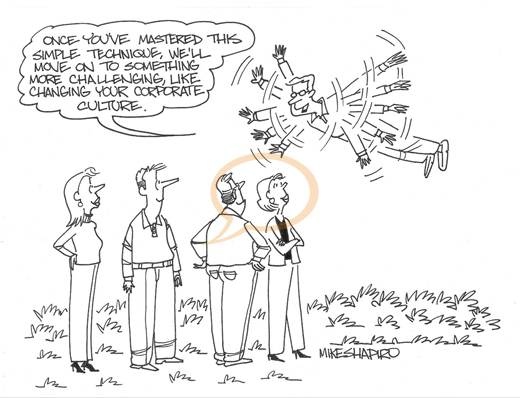
How to Grow Your Business in Five Steps

Growth is a pre-requisite for business success. In today’s rapidly changing business environment, most companies need to grow just to stay in place. They need to expand market share, seek out related and new market opportunities, and constantly pursue new customers just to stay even over the long haul.

To grow successfully, businesses need to build upon their success with current customer and grow outward from there. As such, the five steps to business growth are:

  1. Satisfy Your Current Customers: As discussed in 8 Steps to Satisfy Your Current Customers and Re-Charge Growth, the first step for business growth is to exceed the expectations of current customers. This reduces your customer turnover (churn), which means that you no longer have to find new customers just to replace current customers that have stopped buying from you due to poor service. Further, satisfying your current customers allows you to increase your share of wallet with them.


  2. Increase Your Market Share in Your Current Market Space: Increase your overall market share with your current product line in your current market space. Satisfying your current customers strengthens your brand and proves that you live up to your brand promise. Building on this strong brand and referrals from your good customers, viral market out and penetrate new customers in your current market space.


  3. Work with Current Customers to Determine New Product and Service Opportunities: Your best customers realize that you are an excellent and reliable supplier. Especially, with B2B (business-to-business) customers, these good customers will often invite you to help them in other related parts of their business where they may be having issues. They may also want your help to refine current products and services or to solve new problems that they may be facing. Pursue these potential opportunities aggressively, as they will bind you closer to these best customers and point the way to new product and service offerings that can then be offered to your entire customer base.


  4. Pursue Market Opportunities Already Under Your Nose: Be easy to do business with and open to the potential customers that are contacting you today looking for help to solve their problems: You Don’t Know Me; But, I Want to Give You Money! In addition, follow up with and learn more about the newest customers that are buying from you. Why do they now need your products and services? Is this a trend? Are there other companies in their same market space that now need your products and services as well?


  5. Actively Pursue New Products and Market Opportunities: This is the proactive part of growth and business development. It includes seeking out growing and profitable markets, solving customer’s problems, and finding new market niches where your company can have a sustainable competitive advantage. This can include all the sexy stuff that they teach about in business schools: new product development, market entry strategies, joint ventures and acquisitions. While undeniably important, beware!! The active pursuit of new product and market opportunities is just one out of five steps to business growth; to grow your business successfully requires using all five steps to business growth. As sales and innovation strategist David Cooke says well:

    All too often businesses over-emphasize the importance of new customer sales as a key to building a business. While this is and continues to be an integral component of business growth, real and sustainable growth occurs when a business leverages its relationships–team, customer, suppliers, ownership–in a strategically focused manner to retain and expand the ones it already has.

Posted in Growth and Strategy, Sales and Marketing | Tagged , , , , | Leave a comment

Three Keys to Communication

As business leaders, much of our time is spent in communicating:

  1. Conveying our business goals and direction
  2. Reinforcing our values
  3. Following up
  4. Teaching and training our team

Unfortunately, due to poor communication skills on our part, the distractions of relationships, environment and culture, and poor listening skills on the part of our audience, communication is (in general) only 30% effective. 

So, what can we do to raise the effectiveness level of our communication?

1.    Keep the Message Simple (KISS) – Less is More!

The average person can remember at most three to five items at a time.  Communicating any more than that will ensure incomplete and ineffective communication.  As such, the burden is on the speaker to put significant thought into the three to five points that he or she is trying to convey and to organize these thoughts in a succinct and well-organized way.  We need to be specific and use terms and language that the audience will understand (think eighth-grade language).  Finally, in communicating the three points, we should consider telling stories.  Stories resonate; they are more easily understood and remembered.  Even better; stories are re-told.

 2.     Practice the Rule of Ten

A new concept or idea may need to be communicated as many as ten times before being internalized by the audience.   As the leader, this requires that we promote daily, weekly, monthly communication.  This includes communicating the values and the goals of the business and the expectations for each individual.  In doing this, we should consistently communicate the progress towards the goals: how far the individual or team has come and the remaining gap between the current reality and the goal.  To effectively use this Rule of Ten, all but requires that we keep our message simple and limited to three to five points.

3.    Make Clarifying and Confirming a Habit

To ensure complete and mutual understanding requires that the other person to whom we are communicating summarizes the major points of the discussion.  In many cases, the listener will not have understood the points.   But, unless we follow up directly, they will generally not ask for clarification.  This is especially true in cultures where any sign of weakness can be considered a loss of face and where there may be language difficulties. Some suggestions on clarifying and communicating in daily business:

    1. Summarize.  In one-to-one communication, we should have the person to whom we are communicating summarize the major ideas of a discussion.  Simply asking: “Do you understand?” is not enough as the answer will inevitably come back: “Yes.”
    2. Document in Writing.  After summarizing, we should follow-up with a written summary of the communication.  For meetings, meeting notes should be written up with specific assignments and deadlines. 
    3. Follow Up. We need to plan and document the follow up… and then do it.


While simple, these three keys of communication are often forgotten in our haste to move on to the next issue.  But, unless done effectively, the communication will not effectively take place.  In all our communication, we should judge ourselves against the high standard that legendary football coach Vince Lombardi had for his communications:

Communication doesn’t take place until your people: hear or see what you say; understand it; believe it; believe you mean it; remember it; internalize it; and begin to use it themselves.


Posted in Communication, Team / People | Tagged , , , | 2 Comments

9 Keys to Driving Cultural Change

After years of little growth, command and control management, and cost-cutting, the cultures of many organizations need rejuvenating and tweaking in order to thrive in today’s difficult and increasingly competitive business environment.

But, changing culture is difficult. As Lou Gerstner, former CEO of IBM, wrote:

The hardest part of a business transformation is changing the culture – the mindset and instincts of the people in the company.

So, what are the keys to drive cultural change? Continue reading →

Posted in Improve / Turnaround, Team / People | Tagged , , , , , | 1 Comment

3 Areas Where Consistency from the Business Leader is Critical


One of the keys to good leadership is to be consistent:

  1. Consistent focus on the few critical issues.
  2. Consistent mood, behavior, and decision-making so that your team knows where you are coming from.
  3. Consistent delivery, brand image and presence with the customer.

As George Bradt, a consultant in leadership on-boarding, has said:

Consistency is a trust builder. Inconsistency is jarring.


1.  Consistent focus on the few critical issues
As a leader you want to communicate a consistent focus on just a few critical issues (at most 3 – 5) for each employee or team. And then you want to relentlessly follow up and focus only on those few issues.

Less is more.

First, remain consistent with prior commitments. One of the most demoralizing and exhausting aspects of business is the wasted time, attention and effort on initiatives or programs that are hot and heavy for a few weeks or a few months and then ignored as leaders move onto the next “sexy” idea. If you have committed to a course of action, be consistent and follow-up, seeing it to its end.

Second, being consistent requires that you stay on message, even if that means overlooking trivial problems, no matter how annoying or “easy to fix.” Above all else, you need to focus your attention on the few critical issues. As a Division President visiting a business, I would often come up with 15 – 20 items that needed to be fixed, changed, or easily improved. It was a real struggle to force myself to ignore many of these to focus my attention and the attention of the leadership team of the business on just the 3 – 5 critical issues. But, without this consistent focus, the business would change priorities constantly and soon lose its way.

2.  Consistent moods, behavior, and decision-making so that your team knows where you are coming from
A September 2010 Harvard Business Review panel session discussed the biggest mistakes that a leader can make. One of the most important was being inconsistent – inconsistent in mood, inconsistent in behavior, inconsistent in how a leader makes decisions. This inconsistency breeds fear and uncertainty throughout the business as each employee wonders:

Which one is coming in to the office today?

Will it be the somber, reflective leader? Will it be the passionate go-getter? Will it be the dead fish? Will it be the angry, bitter boss?

A leader is always on stage and needs to show the same positive and consistent face to his or her audience (the team). Of course, this is hard to do when it has been a truly rotten morning. But it is necessary, in order to avoid outbursts of anger, mixed messages, or other destructive and morale-sapping leadership behavior.

3.  Consistent delivery, brand image and presence with the customer.
To build your business, you must first consistently deliver value to your customers. The simple adage of “do what you say” goes a long way as most customers are accustomed to broken promises and poor service. With consistent delivery and consistent service, you can then focus on promoting a positive and consistent brand image with the customer.

As Howard Fluhr, Chairman of the Segal Companies, has said:

Your communication [to your team and to your customer] must be clear, consistent and repetitive over time.

Be consistent in your brand message, your advertising, and your market presence. Common or rapid changes in your message and image distract the customer and prevent them from forming and strengthening an image of your company in their mind. Your consistent performance, message, and presence with the customer (through regular sales calls and interaction) boosts credibility and awareness of your business, what it stands for, and what it can do to help solve the customer’s problems.

Posted in Leadership | Tagged , , , , | Leave a comment

6 Ways A Leader Wins by Doing Nothing

“Just Do it”

“Make it happen”

“Be a Doer”

So much of leadership is about getting things done and accomplishing goals. As such, business leaders are often fixated by activity, motion, and action. The more that is done the better.

As a leader, however, there are times when it is best to do nothing.

  1. By doing nothing, the leader can maintain the business focus on the important goals.
  2. By doing nothing, the leader can develop the autonomy and accountability of the team.
  3. By doing nothing, the leader can better listen and understand what is going on in the business.

As Tim Ferris writes in his book, The 4-Hour Workweek:

“Not-to-do” lists are often more effective than to-do lists for upgrading performance. The reason is simple: what you don’t do determines what you can do.


But, doing nothing is incredibly hard for most action-oriented leaders. To help out, I suggest some areas where leaders should force themselves to do less or do nothing.

  1. Talking: By stopping our constant talking, we force ourselves to listen and hear what the other person has to say. Especially debilitative are the times when we leaders must get the last word in. We need to struggle and restrain ourselves from doing so. Instead, we can let the ideas of our team carry the day without our interjection or seal of approval. It will be their decision for which they are then accountable.


  2. Correcting: It is difficult for many of us to realize that not everything needs to be perfect and that not everything needs to be fixed right now. It is preferable to purposely ignore trivial mistakes. By correcting errors or focusing on issues that are not critical, the leader deflects the team’s attention away from the vital few towards the trivial many. As Pope John XXIII commented, a leader should…

    See everything; overlook a great deal; correct a little.

  3. Satisfying Our Curiosity: Today especially, we are all overwhelmed with endless distractions. Many of us who are over 35 have grown up in an age of relative information scarcity. Now that there is information overload, we often indulge ourselves by following up on all pieces of information in order to satiate our curiosity and satisfy our hunger for information or knowledge. We have become informationally obese. To slim down, resist the curiosity pangs and do nothing. We need to ask ourselves:

    How will reading the morning paper in detail change our lives?

    What chance is there that the next website or blog has deep and relevant insight?

    Much of the information that we encounter is irrelevant to our lives and possibly disruptive to our well-being. Following up on it all inevitably leads to wasted time, distraction, and the accumulation of additional facts and/or tidbits, but without additional understanding.

  4. Initiatives: Most established businesses already have enough going on to completely drown the workers on the front line. I have seen countless small business units facing onslaughts of 10, 20, even 26 corporate initiatives that the team is tasked to fulfill. Stop the madness! While each initiative can likely be justified as necessary, is it really vitally important that they all be done at this time? If you have to undertake a new initiative, then cancel or postpone 1 or 2 on-going programs to give your team the time and breathing space to get the new initiative done correctly.


  5. New Business Development: As with the overload of new initiatives, many businesses are focusing on far too many new business or market areas. The key to effective business development is to first ensure that you are executing on your current business and satisfying your current customers. The second key is to focus on just the few highest potential new business or market areas. As Peter Drucker and countless business strategists have screamed:

    The most important and difficult part of strategy is deciding what not to do.


  6. Working All the Time: Especially here in the U.S., there is a point of pride in always being busy and working. Still, the constant 24 / 7 / 52 dedication to the job often hinders performance and most certainly destroys work-life balance. Instead, we should set up guidelines to not work or even surf the internet after a certain hour in the evening and for at least one day a week. We will sleep better, relax, and re-charge the batteries. For us workaholics, this will be the hardest test of our ability to do nothing. To be untethered from the computer, the smart phone, and the office for a whole day will likely bring on withdrawal symptoms and cravings to check the Internet or the E-Mail. Resist resist resist. When we get back to work, we will realize that we really did not miss anything that earth-shattering; the show did go on. And we may also have realized how pleasant it was to spend a whole day fully engaged with family and friends, doing nothing special.

    Dolce Far Niente (The Sweetness of Doing Nothing)

Posted in Leadership, Personal Success | Tagged , , , | 2 Comments

Humility – A Leadership Attribute Throughout the Ages


One of the most difficult challenges for any leader is to remain humble in light of the success that the leader has achieved.  Our business success inevitably leads to greater self-confidence, especially as we inevitably over-estimate our personal role in that business success.  As Bill Gates said well:

Success is a lousy teacher.  It seduces smart people into thinking they cannot lose.


What is Humility?

Humility is the personal honesty that you, as the leader, do not know everything and do not have all the answers.  Humility enables you to question people’s flattery, to admit your mistakes and weaknesses, and to be more open to other’s opinions and challenges to your viewpoints.  It is certainly not a coincidence that in Good to Great, Jim Collins identifies the characteristics of the best leaders as possessing:

A paradoxical blend of personal humility and professional will.


Humility and Ego

In his book, What Got You Here Won’t Get You There, Marshall Goldsmith defines 21 weaknesses in leadership behavior that he characterizes as “stupid things top leaders do that they need to stop doing now.”  The root cause of virtually all of these behaviors is the ego of the leader:

1.  The ego that tells the leader that he knows everything and is always right.  As Yogi Berra said:

There are some people who, if they don’t already know, you can’t tell them.

2.  The ego that tells the leader that she is better than the others who are subordinate. 

3.  The ego that tells the leader that he does not need to play by the roles.

Through these behaviors leaders have let their ego prevail and lost their humility.  By contrast, successful business leaders have great self-confidence, but they retain their humility and honesty as they realize that while talented and hard-working, they are not perfect, have been greatly aided by others, and (yes) have just been plain lucky. 


Humility Across the Ages

This question of humility has been a leadership issue for millennia: 

Ancient China:  “The great leader speaks little.  He works without self-interest and leaves no trace.  When all is finished, the people say: ‘we did it ourselves.’”  Lao-Tzu


Ancient Greece:  The Ancient Greeks had a word for the loss of humility and the triumph of the ego: hubris.  Hubris is the outrageous arrogance where a person in power overestimates his or her own competence and capabilities, gradually loses touch with reality, and (in Greek tragedies) succumbs to a tragic fall.

Ancient Rome:  “To conquer one’s spirit, abandon anger, and be modest in victory… whoever can do this I compare not to the greatest of men but to a god.”  Cicero

Mongol World around 1200:  “The key to leadership is self-control: primarily, the mastery of pride, which is more difficult to subdue than a wild lion.”  Genghis Khan 

Louis XIV France: “Louis’s greatest gift was to maintain his quality of common sense in the midst of constant flattery.  Throughout, the king demanded respect and obedience, not flattery.”  Louis XIV biographer, Olivier Bernier 

18th  Century Austria: To keep herself humble and ensure that she did what was right and best for the Austria-Hungarian Empire, the Archduchess Maria Teresa employed one advisor as her official critic.  It was the formal job of Emmanuel Count Sylva-Tarouca to tell Maria Teresa all of her mistakes.

20th Century America: “To possess self-confidence and humility at the same time is called maturity.”  Jack Welch


Conclusion

As a leader, your success comes about from the success of others.  Maintaining humility allows you to better keep your focus where it needs to be, directed outward towards your team and your customers.  As Ken Blanchard said:

People with humility do not think less of themselves; they just think about themselves less.


Posted in Leadership | Tagged , , , , , | Leave a comment

Five Things a Business Leader Should Do Today and Every Day


Successful business leadership depends on the words and ideas that the leader contributes to the organization. But even more significant, is what the business leader does. As Ralph Waldo Emerson once said:

Your actions speak so loudly that I cannot hear what you are saying.

So, what should a business leader do every day to speak so loudly?


1.  Start Out Proactively
How do most of us begin the day? Perhaps, we get a cup of coffee, read through our E-Mails, listen to our voice mails, maybe even read the newspaper or quickly surf the internet for the major news stories. No, No, No, No and No. These are all reactive activities. Instead, begin the day proactively. Pick the most important task that you need to do and do it first thing (even if for only 30 minutes). Get it done or get a good chunk of it done. Then, you can go get that cup of coffee and begin to go through E-Mails confident that you have completed the most important task for the day.

2.  Walk around, talk around – MBWA (Management by Walking Around)
Get out around and among your people, both your direct reports and the employees below the level of your direct reports. Ask them:

What is going right today?

What is going wrong today?

What do you need to do your job better?

Listen to the answers and break down the barriers. Make it easier for them to get their jobs done. Coach. Encourage. Recognize (“find someone doing something right every day”). And thank them for their work. Not only will you motivate, engage and inspire your team, but you will also learn the “true truths” and “real reality” of what is going on in the front lines of your business.

3.  Touch a customer
Customers are the lifeblood of the business; they provide the money that enables the business and you to succeed. So, spend a part of each day with or discussing customers. Visit a customer to help solve a problem or resolve an issue. Call a customer to thank them for their business. Or spend time with the sales and marketing people understanding more about the customer and more about how your company can better serve and solve their problems.

4.  Learn and think
Every day and every way each of us needs to learn something to make us better, more understanding, more aware, more insightful. By all means, read about your industry and competitors. But, also read different ideas and perspectives that might give insight into new and different ways of building and bettering your business. Then, spend the time and think about what you can do to be better and make your business better. Wrapped up in the daily battle and reactively responding to the daily fires, too many business leaders do not take the time to step back and think about what they are doing and how they can do it better. Take some of that downtime in the car, on the plane, before a meeting, and think. Your business will be better for it.

5.  Give good example

In all your interactions every day, show everyone your values, your goals and your priorities. A fundamental requirement of leadership is to be an example and a model of the behaviors and focus that you want throughout your organization. So, show it by what you do every day and how you do it every day. This advice is ageless. As Sir Francis Bacon said four hundred years ago:

He that gives good advice builds with one hand. He that gives good counsel and example builds with both. But he that gives good guidance and bad example builds with one hand and pulls down with the other.

Posted in Leadership, Perform / Execution | Tagged , , , , | Leave a comment

Who is Managing and Leading Your Front-Line Managers?

Every organization requires strong front-line managers and leaders. The job of developing these managers falls to their direct supervisors, leaders who are “managers of managers.”

These managers of managers must select, train, and hold front-line managers accountable. Alas, many managers of managers neglect this fundamental aspect of their job; they do not coach or teach management skills to their first time managers. Rather, they ignore all warning signs and just let their managers “sink or swim.” This poor leadership is dysfunctional as many first-time managers develop shocking leadership skills and styles. Further, it is wasteful as promising employees progress into management, only to flounder without adequate guidance, and then leave with their career in ruins.

Key Skills for Managers of Managers

  1. Select and train front-line managers. This includes choosing the right people to become managers and teaching managerial skills to first time managers. In addition, they need to support and encourage their front line managers while holding them accountable for managerial work and their team’s results.
  2. Manage relationships across the group. This includes deploying resources (money, time, attention, people) across the group of front-line managers. Further, they need to break down barriers between and among the group, simplifying work wherever possible.


Key Challenge for Managers of Managers

The key challenge for managers of managers is to evaluate their front-line managers’ performance without undercutting their authority. They need to know how their managers are really managing. Are their managers getting results while managing and leading in the proper way? Or are they so focused on results that they have adopted a “kiss up but kick down” leadership style? Managers of managers need to:

  1. Observe the availability and approachability of their managers.
  2. Manage by Walking Around (MBWA). Develop relationship with people below the level of their direct reports. Walk around, meet and interact with them. Ask questions such as “what is going right today”, “what is going wrong today?” Ask alignment questions such as “what are the goals of the organization?” and “what are your three priorities?” Listen to what the people have to say and what they don’t say. Note: if no one sincerely praises or compliments the manager (especially a new manager) in your discussion, then you likely have an issue; the employees’ silence speaks volumes. With MBWA, you may coach the employees, but should not solve their problems. Problem solving remains the responsibility of their direct supervisor, not you.
  3. Review the calendar and daily activities of their managers. What do the managers spend time on? Are they focused on their own work or on the work of their team? Do they allocate sufficient time for managerial tasks such as following-up, coaching, supporting, and training?


Warning Signs for Managers of Managers

There are many warning signs that indicate that managers of managers are not doing their jobs well.

  1. Doing too much individual work. They are too much of a doer; they continue to do the activities that made them successful, or they continue to do the tasks that they most enjoyed in their old jobs.
  2. Too much “make it happen.” With a single minded focus on getting the work done, managers of managers will often take over and directly manage a manager’s employees to “get it done.” This undercuts the front line-manager’s authority retarding his or her leadership development.
  3. Poor delegators. They may have difficulty delegating and letting the front-line managers solve their own problems. The front-line managers must be able to give their views and solve their own team’s problems. No development tasks place if the manager of managers is solving every problem or making every decision.
  4. No feedback. They give little or no feedback to their managers. There is no focus on performance management (reviews and periodic assessments).
  5. Failure to build a strong and diverse team of front-line managers. They may leave poor managers in their roles. Or they build a weak team of managers. Or they build a group of managers that are all clones in personality, expertise and leadership style. The goal is to develop a broad and diverse team of outstanding managers.
  6. Bunker mentality with the rest of the larger organization – us vs. them.
  7. Too much ego. As in all leadership roles, there needs to be a value shift. It is no longer about the manager of managers as an individual performer (“I”); it is about the long-term success of the group of managers and team that the manager of managers builds (“We”).
Posted in Leadership, Team / People | Tagged , , , | Leave a comment

4 Warning Signs That a New Manager is Failing

Perhaps, you have just been promoted to management for the first time. Perhaps, you have just promoted someone to their first management role. In either case, the next few months will be a challenge. The shift from valued contributor to successful manager is a difficult road with potholes, detours, and drop-offs up ahead.

As such, it is vital to detect the warning signs when a first-time manager is struggling. It is likely that the performance of the manager’s team will not immediately crater. But, these warning signs, these flashing “yellow lights” will give a heads-up that something is not going well and that future problems are just around the bend.


1.  The Manager Does Not Change Mindset and is Still All About “I”
First time managers are nearly always promoted to that position because of their individual success in their previous positions. They are high performers who have been accountable and performed. Well Done!! Now, however, their success will not be measured by what they themselves do. Rather, they are evaluated based on the success of their team. Thus, the new manager’s overriding focus needs to shift to the performance of their direct reports and getting this team to get their jobs done.

This is a significant shift in mindset; the manager needs to think less about “I” and more about “We.” As a colleague once said:

You need to take the “I” out of ego.

Failing first-time managers do not change their mindset and remain focused on their individual performance. Further, they may refuse to take ownership for the performance of their people, distancing themselves from the team’s problems, challenges and failures.


2.  The Manager Does Not Utilize the Basic Management Toolkit
As a first-time manager leading on the frontlines, the key skills remain:

  1. Defining and assigning work to be done.
  2. Ensuring that the direct reports have all the tools and time to do the work.
  3. Following up and providing feedback and support (encouragement, recognition, gratitude) to motivate and engage the direct reports to get their work done.
  4. Problem solving and removing obstacles that hinder the direct reports from getting their work done.
  5. Building relations across the company with other managers.

Effective managers spend most of their days on these basic management tasks and realize that it is their job to get their team to do their job well. Flailing managers spend little time on these skills, most often neglecting the follow-up. In addition, they will often interject themselves in the work of their team fixing their people’s mistakes rather than teaching them how to do their work correctly.


3.  The Manager is Power-Tripping
The manager may be rarely available and not approachable. She may view questions from direct reports as interruptions from her “more important” work. Or he may over-rely on his title (and position), barking out orders and threats to get his team to do something.


4.  The Manager Refuses to Admit That He or She is Drowning
Becoming a manager does not come naturally, especially for a star individual performer. All too often new managers refuse to admit that they are not succeeding. To get the team’s work done, they go beyond fixing people’s mistakes and begin to take on more and more of the team’s work themselves. They stop delegating and justify their actions with the slogan: “if you want something to be done right, then you need to do it yourself.” And they do not ask anyone (boss, peer, trusted direct report) for help.


Conclusion

Avoiding the potholes and developing successful and skilled first–time managers is a vital task in any organization. First, these new managers are on the front lines of the business where 90% of the daily battle takes place. Second, these first-time managers are the future senior leaders of the company. If they do not learn to be effective managers and leaders at this level, then they will likely never learn these skills with serious and debilitating consequences for their organizations.

Posted in Leadership, Team / People | Tagged , , , | 2 Comments

8 (Almost) Fundamentals of Problem Solving


As business leaders we are bombarded with challenges that need to be addressed, situations that need to be improved, and problems that need to be solved.

Of course, each challenge, situation or problem is different. Nevertheless, there are some fundamentals of problem solving.

1.  Define the Real Problem
This is the biggie. Ensure that you are solving the right problem. And ensure that you are solving the root cause of the problem and are not just treating the symptoms. There are numerous methods to determine root causes – cause mapping, fishbone diagrams, etc. For me, the easiest is to use the Five Whys. Ask a question and to each answer ask Why? again. Doing this for five times should get you to the root cause of the problem, which may be very different from what appeared to initially be the problem.

2.  Define the Real Problem
I have to repeat this because it is so important. Determine the real problem and solve it. Toyota is justifiably famous for its problem-solving savvy in perfecting its production methods. According to Toyota, the key to their method is to spend relatively more time defining the problem and relatively less time on figuring out the solution.

3.  Get the Facts
Dig deep and get the facts to truly understand the nature of the problem and the possible solutions. Do the analysis to let the facts do the talking instead of gut instinct. As Wharton Professor Peter Cappelli says:

I tell my MBA students that whenever you are going with your gut, you are doing something wrong. In most cases, you can actually figure it out. So, you should sit down and figure it out.

 4.  Use Hypothesis
As happens on the CSI television shows, make a best guess as to the solution to the problem at the beginning – define the initial hypothesis. Then test this initial hypothesis digging deep to determine whether the hypothesis is right or wrong. Then, adjust the hypothesis as the facts dictate. This use of hypothesis has been the basis of the scientific method for the last several hundred years. There are two advantages to problem solving using a hypothesis. First, the initial hypothesis gives you a framework, a way of explanation, to understand all the facts and data that you are collecting. Second, by calling it a hypothesis that still needs to be proven you avoid becoming locked in on a solution and are more open to changing your mind as the facts dictate.

5.  Keep the solution simple
Any solution to a problem has to be implemented by your team. Thus, keep the solution as simple as possible. Be able to explain the solution to the problem clearly and precisely in 30 seconds or less. Keep the action items to solve the problem to three or fewer. Think 80 / 100. Go for the solution that solves 80% of the problem, but that is 100% implementable by the team rather than the 100% solution that is unlikely to ever be properly implemented.

6.  Do not re-invent the wheel
Unlike in school, plagiarism can be good. If someone has a clever idea or way to solve your problem, by all means legally use it. “Not invented here” syndrome is just sheer arrogance.

7.  Gain momentum in problem solving
In situations where you have multiple problems to solve (for example, a business turnaround, new market development, or an acquisition) pluck the low hanging, but important, fruit first; solve the easy problems. This gives momentum, shows progress, and gives your team confidence. Then focus on continuing to hit singles, not home runs. The way to success is to solve hundreds of little problems.

8.  Consider time
Look at the time element in problems and problem solving. In any solution, think critical path to ensure that you do first what needs to be done first. Also, ensure that the solution can be implemented in a reasonable period of time. With most problems, solutions that take longer than a few months will likely fail. The momentum will die out; top management will move on to another “critical issue.” To best solve a problem, implement your solution before the day, before the week, before the month is out.

Summary

Define the problem properly. Solve. Implement quickly. Move on to the next problem. Repeat.

Posted in Leadership, Perform / Execution | Tagged , , , , | 1 Comment

Does Your Company Have the Right DNA?


Businesses have been using personality tests for years to determine employee’s thinking styles and corporate fit. In general, the benefit from all this testing and analysis has been meager. The test results, communicated in complex language, are not easy to put in practice.

Quick question: What does ESTJ mean to you?

Nevertheless, having an understanding of how your leaders think, their personality, and what they prefer to do is important. For several years, we used the more straightforward HBDI testing (Hermann Brain Dominance Instrument) to determine how someone thinks and what they prefer to do. Keeping it simple, the test measures someone’s method of thinking along four quadrants, which can be defined as follows:

  1. Analytical
  2. Organized
  3. Inter-personal
  4. Creative

Everyone is a mix of one of these four types. A superstar may think and have equal preferences in all four quadrants; but that is rare. In general, financial and technical people tend to be more analytical and organized. Artists and designers are more creative (no duh); and sales people are more inter-personal focused.

Now consider the combination of all the thinking and personality styles of your company.

  1. Would an organization of all analytical and organized leaders effectively focus on customers over the long term?
  2. Would an organization of all creative or all inter-personal types effectively execute on all the new ideas and contacts that they come up with?

At the risk of gross over-simplification, the answer is: No!

This mix of thinking style, personality and preferences determines the DNA of the company. This DNA then determines the company’s approach to the market and the company culture.

Three key points about your company’s DNA.

1.  DNA Diversity is Good
People with different thinking styles will clash with one another. The analytical and organized person may be a “just the facts, ma’am” type of person in all his or her dealings, while the inter-personal may empathize more with the feelings of others. As such, there will be conflict. But, this conflict allows diverse ideas and viewpoints into the discussion. Moreover, without the diversity from having people with different personality and thinking styles, the company will become one-tracked and may lose its way as the marketplace evolves.

Many companies achieved success in their business during the great boom by being organized to deliver their products well and analytical in detecting and resolving any inefficiency. Demand was high; operations and finance were king. Today many of these same companies are struggling. They remain analytical and organized and have few creative or customer-focused leaders in positions of influence. Their DNA pool is too narrow. As such, they seek to solve problems in an organized and analytical way even when that is not appropriate. In trying to drive sales and profits, they may focus on pricing programs or re-organizations (analytical and organized approaches) rather than promoting superior customer relationships (inter-personal) and developing new and innovative products and services (creative). Their restricted leadership tool-kit is hindering the business from adapting to the changed reality.


2.  The External Environment Determines the Best Fitting DNA
No one type of company DNA fits with all external realities. In the example above, an analytical and operational focus worked quite well in the boom years. Likewise, many computer companies have struggled as they have not adapted. Led by techies they have under-appreciated the evolution in the marketplace. No longer does the latest and coolest technology win the battle. Now, having the most innovative, best-designed (think Apple) technology is the critical factor for success. In short, struggling technology companies have not evolved their DNA to downplay the analytical side and strengthen the creative side.

As with evolution, the winners will be able to adapt and fit their corporate DNA to the changing external environment.

3.  To Change DNA Significantly Usually Requires New Blood
People can evolve their own DNA – their unique mix of thinking style, personality, and preferences – somewhat. But, to really evolve and change your company’s DNA requires new leaders with different ways of looking at reality, different ways of thinking and different preferences. This new blood strengthens the overall company gene pool by adding new mindsets and new personalities. This will certainly lead to conflict; but it will also make the company more adaptive to the changing marketplace. As you consider how to succeed in the “New Normal” reflect on what is lacking in your current company DNA. Then, either find someone in the company that has that “missing link” or hire from the outside. Your company’s long term success and survival may depend on it.


Posted in Perform / Execution, Team / People | Tagged , , , | 1 Comment

For Better Business Results, Use Yellow Lights

Quick Question

Why are functioning traffic lights at an intersection so much better than a policeman signaling traffic?

  1. The yellow light gives each driver a signal in advance, a heads-up allowing all approaching traffic to make decisions ahead of time and adjust their behavior. If close enough to the intersection, the driver can continue or even (so I have heard J) speed up. If far enough away, the driver can
    slow down and brake. Policemen have but two signals: a wave of the hand (green) and an outstretched palm (red).


  2. The traffic lights are above the level of traffic and quite visible. On straight streets, they can be seen as far as a mile away. With their illumination, a driver from any direction can clearly see the lights and respond. By contrast, the policeman is at ground level with his hand signal at most six feet off the ground. He is all but invisible to you until that big black Escalade in front passes him by.


  3. The traffic lights are consistent. There is a consistent time that the lights are green. And there is a set and carefully considered duration for the yellow light allowing traffic to come to a halt in one direction before traffic in the other direction proceeds through the intersection.

In short, the yellow lights make the difference.

But, what does this have to do with business?

To optimize any aspect of your business – be it operations, sales, or customer service, it is beneficial to communicate with yellow lights.

In short, give a heads-up or an advance warning of impending problems.

Use yellow lights to give the customer or the other party, a heads up that there may be a problem or that you will be delayed. This signal in advance allows the other party to adjust what they are doing to reduce the fall-out from the setback or delay. As one customer wrote us after being adversely effected by a delay which we had not communicated to him:

Had all parties known of the delays, we may not have been happy but at least we would have had an opportunity to make planned adjustments to schedule and revenue. And we may have avoided the negative financial consequences which resulted from this delay.

To make the yellow lights as effective as possible, make them visible and obvious so that everyone knows that there is the potential for a problem. Clear communication to all involved is essential. An example from the world of production would be kanban cards, which offer a clear, visible method of yellow lighting and indicating that a level of stock may be low and soon needs to be replenished. The point of this effective communication is to ensure that attention is directed towards solving the issue that is causing the yellow light and mitigating the fall-out from the setback.

Further, create consistency in the use of yellow lights. Require yellow lights in all cases where there might be an upcoming issue. The more consistently yellow lights are used, the less of a stigma will be attached to admitting that something might be going wrong. Nearly all employees are aware of the historical fact that (yes) messengers often do get shot. By encouraging regular and consistent yellow lighting, you can reduce the innate (and justifiable) fear of communicating a problem or potential problem.

The alternative to using yellow lights is to abruptly change from the cruise control of a green light to the car crash of a red light. As a result, the problem is not promptly addressed, everyone else is caught by surprise, and the resulting damage from the problem or delay is magnified.

Posted in Communication, Perform / Execution | Tagged , , , | Leave a comment

Four Reasons Why Leaders Don’t Take Action

The external environment is changing; we are living in the “New Normal”. The business is falling behind and weakening. Yet, nothing happens. No change takes place. Critical issues are not addressed. The leadership continues to do what it has always done.

But, why? Why aren’t the business leaders taking action to change their business model and get their company back on track? Undoubtedly, the leaders are working hard and want to succeed. So, what is stopping them from facing the problems head on?

In short, why do they procrastinate?


1.  The leaders don’t detect the problem – Boiled Frog Syndrome
According to this anecdote, a boiled frog that is placed into a pot of boiling water will immediately jump out. A boiled frog that is placed in a pot of cold water that is then heated will not notice the gradual difference in temperature. This frog will not jump out and will eventually die. Likewise, many leaders may not notice the gradual deterioration of their business and believe that nothing has changed. “Yes, sales are down. But, it is just the economy.” These leaders continue to see the reality of the world and their business as it might have been several years ago. Without an obvious reason for change, they won’t.
 

2.  The leaders are waiting for an external change that will solve their problems – Deus Ex Machina
Deus Ex Machina comes from ancient Greek; it means “god out of the machine”. Deus Ex Machina refers to a plot device in ancient Greek theatre, where a play would be resolved by having one of the Greek Gods appear on stage (either flying in from above dangling from a crane or emerging from below by a riser lifting the god through a trap door). Once on stage, the god would save the good, punish the bad, and make everything all right.
Today, many businesses have run into similar dead ends and need to be saved. Alas, there is no god coming out of the machine to resolve everything by changing the reality back to the way it was a few years ago. Business leaders need to stop waiting for the housing market to recover, for the economy to turn around, for the government to fix Health Care, Medicare, you name it. Business leaders need to stop waiting for their problems to be solved. Instead, they need to start taking take the action to fix and grow their businesses in the cold, hard business reality that now exists.

3.  The leaders are uncomfortable or fear the change and what it brings – Comfort Junkies
By nature, leaders, like everyone else, get into routines of what they do on a daily basis. They usually stay within this comfort zone as a way to reduce stress, to be reassured, and because it is easier. Taking action to address the changed critical issues and to change the business is hard. It requires more work (which usually is not a problem) and it requires different work (doing different things that you as the leader may not be good at).

Further, it is risky. There is no certainty that the change will be successful. And if it is successful, then the change may mean that the leaders lose power, position and prestige as the new skill set required to lead the business no longer matches their skill set. Alas, as leaders we are not paid to do what we like to do, we are paid to do the right thing for the business. We are paid to get uncomfortable. We are paid to take a professional risk. We are paid to drive our businesses to success.

4.  The leaders are too busy and do not have enough time to bring about change – Lack of Priorities
For other leaders, it is all a matter of time. They would change if only they had more time. Sorry, but lack of time is just an excuse. If you know that your business needs to change. If you know that your business will not be magically changed by some different external circumstances. And if you are willing to get out of your comfort zone and confront the fear and uncertainty that the change might bring. Then finding the time to get the right change done will be easy. Prioritize on this most important of tasks (adapting your business to the new strategic reality), and you will have plenty of time to get it done.

Posted in Leadership, Perform / Execution | Tagged , , , , , | 1 Comment

Are You Open to New and Unexpected Customers?

Most likely, a number of potential new customers are contacting your business today to see if you can help solve their problems: they will walk through your doors; they will call you on the phone; they will contact you by E-Mail; they will connect with you through your Website.

How will these potential customers be treated?

  • Will your company be easy for these customers to do business with?
    • Will your company’s professionalism show through?
    • Will their phone calls or E-Mails be returned?
  • Will you solve their problem?

In short, are you open to these new and unexpected customers?

We are all aware of how difficult it is, at times, to buy from companies. In fact, I experienced just this in the last two weeks.

My wife discovered some old style 3.5 inch “floppy” disks with pictures of our children when they were very young. We wanted to be able to access these photos and keep them in our digital library. But, we no longer had a drive that could read the disks. My first stop was the local Audiovisual store which promises to help with “all things audio and all things video.” The uninformed clerk at the store had no idea what I was talking about. But, he took my information and promised that the manager would call back as soon as he got back to the store. I am still waiting for the call.

Now, it was time to buy a 3.5 inch disk reader that could connect to my computer allowing me to transfer the photos myself. So, I went off to three different electronics chains, two of which specialize in uncommon pieces of electronics. None of them had it in stock. And none of them gave me any assistance or suggestions to help me find what I was looking for. In further research, I found that one of the chains had what I needed at a neighboring store. And another chain had it on their website. Alas, this was too late; I had already bought it on Amazon.

Each of these companies had the opportunity to receive my money. But, they all dropped the ball. To them, I was a simple inconvenience, not a customer with a problem to be solved. Yet, they lost something bigger than the $20 I eventually spent; they lost me as a potential customer the next time that I have a similar, somewhat out of the ordinary, request. And they do not even know that they have lost my potential business.

Most B2B businesses proactively manage the sales funnel to make an unqualified prospect into a potential customer into a completed sale. But, what about those potential customers which are not on the sales funnel or not on the sales plan? What about the unknown customers who have already taken the initiative to contact your business? How many times a day do we drive away customers because of our lack of responsiveness or inability to even begin to help solve their problem? And how much does this cost us in terms of lost business and lost growth that is all but invisible?

Two further anecdotes:

The Good: One $4M a year customer helped lead us into a new growth market. This customer initially contacted us and a few others with a phone call after the customer had done an Internet search. We were the only ones that responded promptly and professionally. Thank goodness.

The Bad: A few years ago, I met a potential customer at a local networking event. After we got to know one another, he remarked that his company purchased a lot from our local competitor. I asked him why he had not considered buying from our company, especially as we were well-established in the market. His response was sobering: “Oh, I tried to buy from you. First, no one ever returned my call. Finally, I did manage to speak with someone. But, he told me that since my request was not a standard product, he did not have the time to help me. So, I went to your competitor.”

Three takeaways:

  • If you can, track all calls that come into your office, even those from new and unexpected customers and ensure that you are doing your best to serve them.
  • Consider following up with these new customers a little while later. These customers could be fruitful; they already know you exist, and they have already taken the initiative to contact you. And if you have helped them, they may already think positively of you.
  • Even if the customer request is tangential from your business, you can help them down the path of solving their problem. It rarely takes that much extra effort and, if need be, “you can always say ‘No’ later.”

To have a customer service perspective is to believe that every interaction with a possible customer provides an opportunity to create a positive, lasting impression.

Posted in Growth and Strategy, Sales and Marketing | Tagged , , | 1 Comment

Three Hidden Truths about Change – Guest Blog by Howard Perlstein


For 14 years I have been a corporate trouble shooter, the one brought in to figure out what is broken, to tell people what is wrong, to clean up a mess, to get people through gut-wrenching change. My job does not have quite the “glamour” of George Clooney in the recent movie, Up in the Air. I do not fire people and I do not leave once the plan is developed. Nevertheless, my outsider and fixer experience has given me insights into three truths about change and the change process.


1.  Change will happen and some people will lose.
 

Normally, I am involved in environments where events are politically charged and emotionally intense – where the consequences of not changing the status quo far exceed any pain from change. I am usually the person asking everyone to take off the rose colored glasses and see the world as it really is. I have been called the doctor, the rock at the bottom of a stormy sea. But, I cannot stop the change, even when I want to. Quite often bad things happen to good people. Change happens all the time and always will happen. And change is not always in the best interest of everyone. Some people will lose. But, without the change, everyone would lose.


2.  People respect authenticity.
 

Your employees, your team members, all of us, know truth. So when you talk genuinely to your people, they will know. And that will make all the difference. This does not mean you can save someone’s job, keep their job from changing, keep someone from getting moved across the country, or change the hierarchy in an organization. But, you can, without any cost, respect each person and be straight with them. This candor takes guts. They may not like you for what you have to do or what you have to say, but they will respect the honesty and dignity of how you did it. This brings me to my third, perhaps most radical truth about change.


3.  Dignity is paramount.
 

You can get any change done if at the core of everything you think and act with dignity. Relationships make or break any business, and dignity is the DNA of relationships. Treating everyone with dignity has not historically been a hot topic at the country’s top management schools or spoken aloud in corporate board rooms or executive offices. In practice, however, relationships and dignity are essential to making the most difficult changes and minimizing the fall-out from the changes. But, you cannot give dignity and respect for the employee mere lip service; it needs to be authentic.

Conclusion

The repercussions from change are diverse and long-lasting, which is why many organizations do not accurately see the connection between poor change – where people are neither respected nor told the truth – and dignified change. Yes, these truths about change may seem obvious, even self-evident. Yet, few try to employ them and even fewer succeed. As such, these three truths about change and the change process remain hidden from many managers. Nevertheless, these truths remain profound.

Howard Perlstein is a consultant specializing in Business Transformation and Process and Operational Excellence. Howard welcomes your comments and feedback. He can be reached at howard@howmanagement.com.

Posted in Improve / Turnaround, Leadership | Tagged , , , , | 6 Comments

La Femme Nikita and Business Strategy

Recently, I watched an episode of Nikita, a spy v. spy television drama. In the episode, Nikita is approached by the leader of the evil terrorist syndicate, Gogol, who suggests that they team up to defeat Division, their common enemy. Before responding, Nikita “plays it forward” and talks through the likely scenarios. First, if they cannot defeat Division, then naturally Nikita loses. Second, if they are successful in defeating Division, Gogol would become much more powerful, and Nikita would have a new, even more formidable foe that she would need to fight off. As she would lose either way, Nikita declines Gogol’s offer.

As companies begin to develop new strategies to re-kindle growth, they would do well to remember Nikita’s concept of “play it forward.”

Scenario Analysis

“Playing it forward” is a simple name for scenario analysis. In scenario analysis (also called scenario planning), a company analyzes the different possible outcomes of a strategy to understand all risks and pros and cons of the strategy. Typically, such scenario analysis occurs with large strategic decisions such as acquisitions where two scenarios are fleshed out: a base case and a downside case. When done well, the downside case analysis is crucial to determine the risk of the strategy. And it often creates “trigger points” for a change in strategy or “strategic retreat” if things are not going to plan.

  • In one instance, we were considering acquiring a money-losing business. In analyzing the different scenarios, we determined that the downside case was limited; we were buying at such a discount that we would break even if we had to liquidate the whole business within two years. In short, with our downside covered, we made a good one-sided bet (since we could not lose much, we could only gain) and proceeded. The acquisition was a success.


  • In another case, we realized that a market entry strategy that made good sense in the base case turned out to be an absolute disaster in the downside case as the particular market had significant and long-term exit costs. We re-assessed our commitment to this new market and decided not to continue.


Success Scenario

Besides just considering a downside case, it is important to analyze the success scenario. Assume that the strategy that you have chosen becomes successful. Then, brainstorm about what this future state looks like and what are the consequences of this success.

  • If successful, what would your company be required to deliver? Would your company be properly organized to deliver that better than the competition? Would your team be capable of delivering on the promise?


  • If successful, would you be able to sustain your differentiation and the competitive advantage? Or would your new strategy just raise the cost of doing business for all supplier companies without differentiating your business in the long term?


  • If successful, would you be competing against your current customers or current key suppliers?

In one case, we were half-way through a multi-year product development initiative to introduce a standardized product line in a semi-custom business. We finally had the data to work through a success scenario. By playing it forward, we realized that if we were successful with this initiative the overall business would lose.

  • We would have satisfied the corporate staff of our incumbent national customers, but alienated the local and regional teams who had all the power day to day on the ground.
  • We would have lowered the barriers to entry in the market, opening the door to smaller, more aggressive, but financially weaker competitors who had until now been excluded from the market.


Faced with this “lose-lose” outcome, we quickly pulled the plug on this initiative.

Conclusion

Before embarking on your business strategy spend the time to think about what the world would be like if you achieved your strategic goals. You certainly want to avoid spending inordinate time and effort only to prove that age-old adage:

“Be careful what you wish for as you may just get it.”

Posted in Growth and Strategy, Perform / Execution | Tagged , , , | 1 Comment

How to Make Yourself Heard Above the Noise

The biggest challenge “was just getting people to pay attention. It’s seventy percent of the battle.”

Dan Gilbert, CEO of Quicken Loans


With today’s biblical flood of information and communication, how do you get your message heard by the right people? How do you get people to pay attention?

Do’s

  1. Be brief, specific and easy to understand

    Keep the message short and simple. Use 8th grade language. Use bold, vivid words and images that “stick” in people’s skulls. Avoid the bland words that have lost all meaning – value, synergy, solution provider.


  2. Target the message specifically to the audience

    While you may be able to solve a broad array of problems, focus the message on what you do best and what is in the best interest of the audience that you are trying to reach. The goal is not to be front of your customer’s mind all the time; the goal is to be front of mind when they are looking for the solution that you can best provide.


  3. Use stories to enhance credibility and give a personal touch, thus becoming more memorable.

    A colleague, Paul McGhee, explains it well in his Sales Scale blog:

    “Selling is asking the right questions.  Selling is listening.   And selling is telling the right stories.  Some stories are best told with pictures, some with numbers, some with analogies, some with comparisons, some with customer quotations, some with 3rd party data and some with internally observed metrics.  You don’t tell every story every time.  But if you “frame and tame” – tell the right stories at the right time in the right way – you win more.  And if your entire sales team is telling the right stories, you win a lot more.”

  4. Develop a relationship or a commonality with the customer or the audience

    Network to get warm leads instead of relying on cold calls. A personal referral all but ensures that you will at least get in the door. Know about the people and companies with whom you meet and use this knowledge. We all like to be stroked and reminded of something we may have done well.

  5. Listen

    With so many of us speaking all the time, the person who listens to others is unique. Listen and then clarify and confirm what the other person has said. This shows your interest and shows that you care.


  6. Give it away

    Give your customer something that may help them in their business – advice, an insightful article on their industry that you may have read, your informed perspective on their industry and growth possibilities. Even if you don’t get the work, you will be remembered because you have helped them.


  7. Create trust that you will do what you say

    Set yourself a specific goal or deliverable to the customer or audience, and then deliver on it perfectly. “I will send you a detailed proposal by noon tomorrow, and I will follow up with a call on Thursday at 10:15 am.” This will differentiate you from the 95% of business people who do not deliver on what they say they will do.


  8. Be consistent over time

    The value of your message succinctly and consistently delivered over time is what helps you stay front of mind. Regular customer contact is vital to prove your reliability and preserve relationships.

Don’ts

  1. Don’t speak too loudly or too flashily!!!!!!!

    The decibel level in our environment today has continued to climb, reaching 110 dB or even higher. Screeching, screaming, and constant hard selling just ratchet the volume up even higher. Do you really think that this point is more important because I added seven exclamations points? Instead, try to vary the volume. Sometimes, speak in person or with your message very softly and then louder. The change in volume is what gets noticed.


  2. Don’t promise too much

    The forgotten part of how to always “do what you say” is to not say as much. In other words, promise less and make sure you always deliver on it. As customers, our suspicions always rise when someone is promising too much. Do we really believe the never-ending promises and guarantees in a 2:00 am infomercial?


  3. Don’t talk about yourself too much

    It is all about your customer and target audience. Keep it on radio station – WII-FM (What’s In It For Me).

    As an anecdote, a few years ago, I went with some salespeople on an important sales call. The meeting was scheduled for an hour. The presentation about our company lasted for over 50 minutes. We actually never got around to talking about the customer, his problems, and how we could help solve them. Not surprisingly, we did not make the sale.

    It is great when you are proud about your company and what it does. But, honestly, the customer and the target audience really do not care. They just want to know how you can help solve their problems.


  4. Don’t Garble

    Keep your message on point. Resist the urge to add interesting, but ultimately irrelevant, information. The more garbled or jumbled the message, the more confusing it will be for your customer or audience.


  5. Don’t overwhelm

    Excessive information and too much contact can begin to grate. Create short, sharp messages on a regular basis to put you front of mind and reinforce. And nothing more. When visiting with customers, get in and get out; don’t waste their time.

Having the perfect solution to someone’s problem is insufficient. You must also make yourself heard.

Posted in Business Acumen, Sales and Marketing | Tagged , , | Leave a comment

Seek Out the True Truth

“There are three sides to every story: your side, my side and the truth. And no one is lying.”

Robert Evans (Hollywood Producer)

For business leaders, it is vital to seek out and find the “true truth” in order to make decisions based on facts rather than opinions.

What is the “True Truth?”

On July 12, 1998, Brazil lost to France in the World Cup final by a score of 3 – 0. Earlier in the day, Ronaldo, Brazil’s star and the best player in the world at the time, had suffered a seizure of some type. In any event, he played the game, but played poorly. After the game,
the Brazilian public and media could not believe that their favorites had lost. This led to a suspicion of foul play and corruption. As detailed in Alex Bellos’ book, Futebol: The Brazilian Way of Life, the Brazilian senate decided to investigate the event and determine why Brazil had lost. Ronaldo was, quite naturally, called to testify. He gave his opening remarks:

I also hope that my truth pleases you, because there are many truths, many truths. It’s up to you [the Brazilian Senate Commission] to decide which is the true truth and analyze it afterwards.

“My truth.” “The true truth.”

For our purposes of business leadership, Ronaldo hit it on the head. As a business leader, it is your job to seek out and find the true truth. You will hear lots of truths from lots of different people. You may call it their opinions, but to them it is not their opinions, it is the truth. It is their truth. As a leader, you will need to hear all these “truths” to determine the “true truth”, the “real reality.”

So, how do you go about finding the “true truth”?

  1. Seek out multiple viewpoints
  2. Listen
  3. Observe

Seek Out Multiple Viewpoints

This one should be easy, but it is not.

Be a researcher and a historian. Get the primary source material from the mouths of your customers and employees. This means direct engagement with the customer. This means developing relationships with people in your business below your direct reports. This means listening to other stakeholders.

Importantly, in any issue, dispute, or conflict, get the viewpoints of all sides. I would tell my General Managers that I would not fault them for making a wrong decision after getting the “truths” from all key stakeholders. But, I would fault them for not getting the “truths” from all affected stakeholders, even if they made the right decision in the end.

Listen

Listening is one of those skills where 90% of us rate ourselves as being in the top 10%. Alas, few business leaders listen well. We all know how to listen well; we just do not do it. As evidenced by this quote from Sir Francis Bacon, the advice on how to listen well has been the same for at least four hundred years:

Listen not to contradict and disprove, nor to believe and take for granted, nor to find talk and discourse, but to weigh and consider.

We all know how to do it; we just do not do it. Some simple ideas that I have tried include:

  1. Physically force yourself not to be distracted. Move away from the desk and keyboard, put down the smart phone, remove the distraction
  2. Briefly summarize what the other person has just said
  3. Especially for meetings, create an “interruption fund” where you pay $5 to a quarter-end “cookout fund” each time you interrupt

I have one anecdote about interrupting to share.

In the early 1990’s, I had an excellent mentor at TRW. We were having a meeting, and I proceeded to interrupt him. He told me that I was interrupting him. So, of course, I interrupted him to tell him why I interrupt so much. His response was to interrupt me and tell me the following: “I don’t care why you interrupt because I don’t care about the “why.” It took me thirty years of psychoanalysis to realize that the “why” does not matter. What matters is to just not do it. So, do not interrupt.”

Another aspect of listening is to listen to and interpret the meaning behind the words. Most of us make the assumption (which is usually the case) that people are telling us the truth. But, they are always telling us “their truth.” We must first respect that it is their truth; that it is what they believe. More importantly, we must think about and reflect on their point of view and why they are saying what they are saying.

In his book The Management Myth, Matthew Stewart describes the listening style of one quite brilliant consultant as follows:

“He does not focus on what you are saying. Rather, he tries to figure out what you want to get by saying it. And then he tries to figure out why you think you want what you want. And then he tries to figure out what he can do about the things that make you think you want it.”

This consultant’s “third order” listening skills may be a little too deep for all of us. But, as a leader, trying to ‘figure out what the other person wants to get by saying something’ is sage advice.

Observe

Get out there and carefully observe the reality as it really is, not as you want it.

Most top executives are treated to Potemkin Villages when they go out and see the businesses they oversee. The expression “Potemkin Village” comes from a story in Russia in the late 1700’s. According to this story, a Russian minister, Potemkin, wanted to impress the Empress Catherine II during a state visit. So, he had hollow facades of villages constructed along the barren banks of the Dnieper River to impress Empress Catherine as her boat sailed down the river.

In my previous company, any announced visit by a top executive, a member of the Board of Directors, or a group of Wall Street analysts would result in a two week spruce up campaign on the facility sometimes to the tune of $30,000 or more. Having approved these expenditures on numerous occasions, I find it hard to fault anyone in the field for initiating such a spruce-up effort. But, the reality is that the top executives are not seeing the company as it really exists.

As a top executive, it is your job to side step the spruce-up campaign and look behind the façades of the Potemkin Village to observe what the business is like on a normal day. This can involve regular visits or surprise visits or just looking closely in the corners.

As an anecdote that encompasses seeking out multiple viewpoints, listening, and observing, I relate a sales call I made as a sales manager a number of years ago.

I often traveled with my salespeople to observe them in action and to interact with the customer. In the sales calls, I knew that my presence changed everything. When I was with the salespeople, they were on their game, organized, prepared, and with pressed shirts. The purpose of my sales management calls was to get the customer’s point of view and to see how the salespeople could be when they were on their best. I could usually accomplish these two things. What I could not usually get was the truth in how the sales people were on their normal days.

But on this sales call, I found out.

I was with a salesperson and he was putting on a good show. He was on his game, and I was impressed. The customer was engaged and asking good, if a little bit basic, questions. And the customer had a big smile on his face the entire time that the salesperson was presenting. In any event, as the sales call wound down, the salesperson had to get something from his car, so I was left alone with the customer. Not being the shy and retiring type, I asked him about the basic questions he was asking and his smile.

His response: “Please don’t tell Kevin (I changed the name), but I am smiling because I am really impressed with how well he can present and sell when he has to, and I am asking these questions because we have never really talked about most of this stuff before. Usually, Kevin just comes in, we go immediately to lunch, have a pleasant non-business conversation, and he leaves.”

Ouch! Despite the odd bout of pain, it always pays to seek out and find the true truth.

p.s. In December 2001, the Brazilian Senate Commission published its findings about what happened at the 1998 World Cup Final. Their conclusion about Brazil was that “we lost because we did not win.”


Posted in Communication, Leadership, Personal Success | Tagged , , , , | Leave a comment

New Year’s Resolutions: Do a Little Less… to Get a Little More Done

The New Year’s Resolutions for many B2B business leaders often boil down to achieving one goal:

Be more successful with their businesses while spending less time working and having less stress.

Given that most business leaders already work extremely hard and that there is little extra time in anyone’s day, achieving this goal requires more effective use of time. In turn, this requires prioritizing and forcing the business leader to focus on the important and to stop doing or to do less of what he or she has done in the past. As Jim Collins of Good to Great fame has advised:

“Be rigorous about what not to do. What you don’t do determines what you can do.”


And so, I begin my suggested New Year’s resolutions for the B2B leader with recommendations on what to do less of.

A Little Less

  1. Reduce the clutter and noise, focusing on the important over the urgent
    1. Less time spent on E-Mail. Try starting the day working on your important tasks before even opening the E-Mail. Try shutting the E-Mail down for set periods during the work day.
    2. Less time spent on internet surfing. Surfing the internet can be a huge time suck. Try measuring the amount of time spent on the internet as a way to encourage you to surf less.
    3. Less time spent on regular reading of newspapers, magazines or trade journals. Skim them or read the headlines. Get the gist. Move on.


  2. Fewer Interruptions
    1. Try to create solid blocks of time for doing work on what is important and resist the urge to check E-Mail or answer the phone during that time.
    2. Try batching your communication with your team; send out one voice mail message or E-Mail covering five items rather than five different messages or E-Mails each with only one item. Or, likewise, meet with a direct report once and cover all five things at the same time. Either way, your people will come to love you for it.


  3. Fewer goals and initiatives
    1. Try focusing on 3 – 5 goals at most
    2. Try to reduce the number of initiatives to the important few and focus your (and your team’s) time and attention on these few.


  4. Less internal activity
    1. Try to have fewer internal meetings, especially at peer levels.
    2. Try to require fewer budget re-forecasts, reviews, and reports, especially the 60% of reports that no one reads anyways.
    3. Try going on fewer non-customer related business trips. Too frequent business trips checking up on operations or visiting with suppliers often waste time.


A Little More

For the New Year, I suggest that we all spend a little more time on the important: our team, our customers, “sharpening the saw”, and ourselves.

  1. More time spent “managing by walking around.”
    1. Try to get out and talk with your team in informal settings to see what is happening on the front lines and how the employees are doing. Thank them for their work, give them recognition, teach and coach them.
    2. Try to set up informal “lunch and learn” sessions where you can meet with people further down in the organization and re-communicate your values and the company’s direction and goals.


  2. More time with customers
    1. Try to visit with customers more often.
    2. As the leader of your business, you flatter your customers in a very positive way when you go out and meet with them and thank them for their business.
    3. While visiting with customers, try to discover other issues or problems they are facing that your company can solve for them.


  3. More time spent broadening your horizon
    1. Try to network outside your industry with other leaders and find out their issues and challenges.
    2. Visit with and understand the operations of a customer or related business.
    3. Use your extra time to read different perspectives that others are not reading; this may include reading different books, following different blogs, or reading a more international perspective.


  4. More “time outs”
    1. Try to break from your digital tether and step away from the business.
    2. Try to stop looking at E-Mail and answering phone calls after 7:00 pm.
    3. Try to take a whole day off each weekend (a “Sabbath”) to re-charge your juices.
    4. Try to take that vacation you have been postponing for the last few years.


Conclusion

In implementing these suggested resolutions, think small. Small changes in your behavior and time allocation will have significant effects on the business and will build momentum.

  1. If you stay cooped up in your office, try to get out just twice a week (do first thing in the morning or put it on your schedule if you have to) to walk around and talk to the team.
  2. If you never visit with customers, try to visit one a month to thank them for their business and see what you can do to help them further.
  3. If you are digitally connected 24/7, to try put down your I-Phone and to not even look at E-Mail or answer a phone call after 7:00 pm and before 7:00 am and one day on the weekend. If you are anything like me, this will be the hardest. But, it will also make you realize how addicted we have all become to the stimulation of instant updates and round-the-clock information.


Since these changes are small, they are doable. While not all-encompassing or earth-shattering, they will be significant, positive steps towards improving your business, improving your life, and achieving your New Year’s Resolution.

Best Wishes to You and Yours for a Happy, Healthy and Prosperous New Year.


Posted in Leadership, Personal Success | Tagged , , , | Leave a comment

2010 in review

The stats helper monkeys at WordPress.com mulled over how this blog did in 2010, and here’s a high level summary of its overall blog health:

Healthy blog!

The Blog-Health-o-Meter™ reads Fresher than ever.

Crunchy numbers

Featured image

A Boeing 747-400 passenger jet can hold 416 passengers. This blog was viewed about 2,500 times in 2010. That’s about 6 full 747s.

In 2010, there were 49 new posts, not bad for the first year! There were 21 pictures uploaded, taking up a total of 2mb. That’s about 2 pictures per month.

The busiest day of the year was November 30th with 109 views. The most popular post that day was More Quotes on “Do the Right Thing”.

Where did they come from?

The top referring sites in 2010 were linkedin.com, innovationamerica.us, businessinsider.com, mail.yahoo.com, and ezinearticles.com.

Some visitors came searching, mostly for do the right thing quotes, doing the right thing quotes, quotes about doing the right thing, david shedd, and quotes on doing the right thing.

Attractions in 2010

These are the posts and pages that got the most views in 2010.

1

More Quotes on “Do the Right Thing” September 2010
1 comment

2

Quotes on “Do the Right Thing” July 2010

3

About June 2010
1 comment

4

Quotes on “Winning Teamwork” July 2010

5

Social Media and B2B – LinkedIn December 2010

Posted in Sales and Marketing | Leave a comment