
“When you lose, don’t lose the lesson.”
Dalai Lama
In my company, as in many others, we have a formal system to review work that we have done. Whether called post-project reviews, re-caps, or post-mortems, these reviews give the people involved an opportunity to reflect on the goods and bads and lessons learned on their work.
Unfortunately, these reviews can be useless if the employee writing the review opines about how he or she and their team did everything great and everyone else dropped the ball and caused all the problems. This is the natural human response as we look to take pride in what we have done well and to deflect blame away from what we have done poorly.
“According to Attribution Theory, people explain their successes and failures by attributing them to factors that will allow them to feel as good as possible about themselves.”
Bradley Staats
To counter this universal human tendency, we require the employee writing the review to answer fully one question:
“What could we have done better to make the project or initiative more successful?”
Answering this question provides a useful and implementable answer that can benefit the employee and the company and serve as either a ‘lesson learned’ or as a reminder. This ‘useful answer’ is so effective because it requires the employee to focus on his or her responsibility for the entire project or initiative even when they may not be in total control.
In the many reviews that we do, the ‘useful answers’ to this question are consistent:
- We needed to communicate more interactively with the customer / end user to ensure that we were on the right path.
- We needed to be clearer in our directives with the other parties, especially on their commitment and the due date.
- We needed to follow up more consistently and insistently with the other party.
- We needed to better understand and adhere to the schedule.
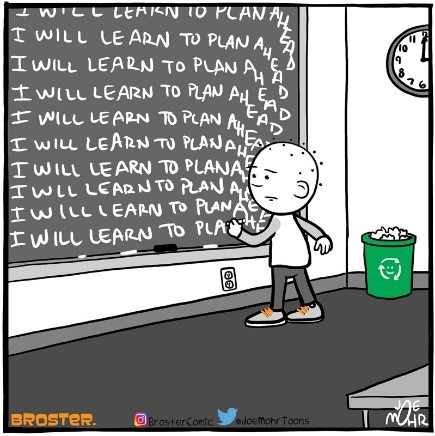
- We needed to better anticipate and plan for the problems and challenges that occurred.
- We needed to ‘raise the red flag’ and get a higher level of management involved when problems first appeared.
These ‘useful answers’ are crucial because the employees involved have 100% control over his or her own actions and can do better on each of these points on the next project or initiative.
These ‘useful answers’ are also great reminders that the tools and practices of good management and good project management are not that complex. But, these tools and practices only work when they are used.







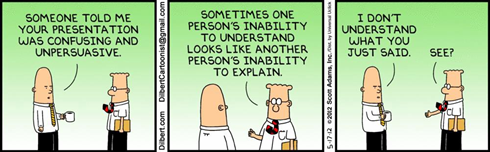
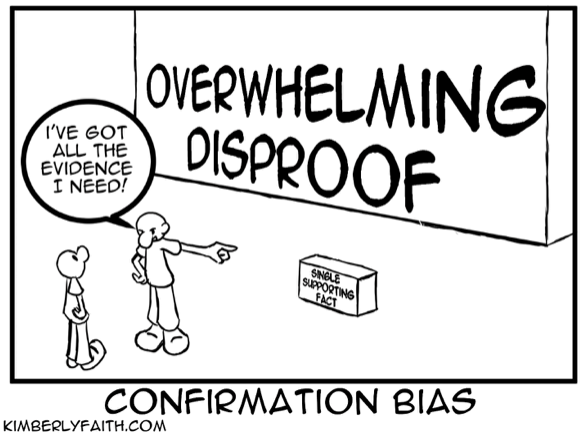 The biggest decision-making bias for all of us is the confirmation bias.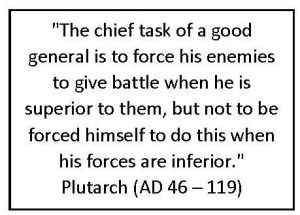
 The IT project took twice as long as planned. The construction project to expand the plant went over budget.
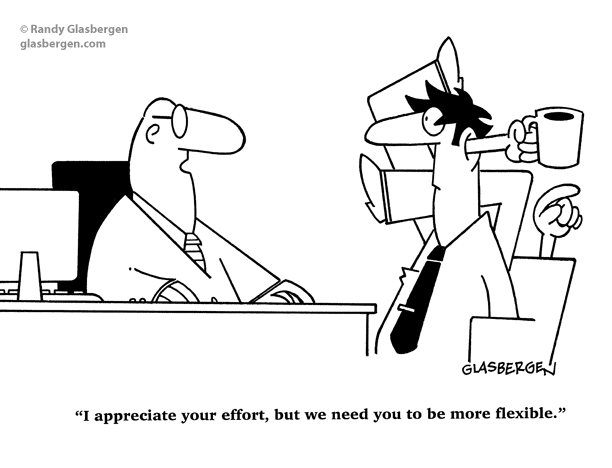 “Predictions are difficult – especially about the future.”
 When continuous improvement is a fundamental part of our company culture, our business gets better every day and will soon out-run and out-perform the competition. Over 100 years ago, Henry Ford wrote:
 As I write this blog, we are in the midst of the Covid-19 Pandemic. Each day brings changes to how and where we can conduct business; we have little visibility into what the next month, three months, or six months will bring; and many of our employees are fearful.
 The consultant, Stan Sipes, once commented:
