
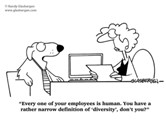
Diversity in the workforce can be a polarizing topic. But having a diverse workforce is more common and more essential than it would have been 15 – 20 years ago:
- Today’s customers are more diverse and require companies to understand their wants and needs
- The employee pool is likewise more diverse than ever
- Diverse viewpoints strengthen any companies’ ability to understand and relate to its diverse customers and to innovate; diversity strengthens a company’s collective intelligence.
Many companies have made great strides in having women and minorities throughout their ranks and in executive leadership positions. This is welcome. But effective diversity needs to go further. It requires that we have individuals with different ages, different ethnic and religious backgrounds, different education levels, different industry experience, different strengths, different passions, and different ways of thinking.
As leaders, how can we build our companies to be diverse and to leverage that diversity into sustainable business success?
- Explain and Promote Diversity: As leaders, we need to explain and promote diversity. We need to explain why a diverse candidate is the best candidate for the position and why someone with a diverse background is vital to the success of the company.
In a small way, I have seen the power of such explanations. In the last 12 years I have twice been hired as a President / COO of a company in an industry in which I had no previous experience. In both cases, my bosses did well to explain to the industry veterans how my different background was needed at the company.
- Overcome the Affinity Bias: The affinity bias is the ‘like-me bias’ where we unconsciously connect with and favor people who are similar to us. In hiring and promoting, we need to involve others with different perspectives to make sure that we are hiring and promoting people based on their ability to do the job, not on how much they are like us.
- Insist on Uniformity: No matter how diverse individuals in our team are, we need to require that each of them works and behaves in strict uniformity with our company’s ethics and values, purpose, and goals. We must insist that all these different individuals with their different strengths and diverse backgrounds share and support the same company vision, and all want to row in the same direction.
“The fully optimistic story where our diversity is our strength…where we all come from different countries but deep down all share similar values.” Garrett Jones
Require Respect: We need to manage ourselves, our direct reports and all employees throughout the company to be respectful of people different from themselves. They don’t need to be friends with these people; but they need to be considerate and respectful (in line with the company values). At the same time, they need to be respectful of and open to different opinions and viewpoints. One effective way to do this is to focus on the ‘why’ of the other person. Why do they think like they think? Why do they act the way they act? Truly listening to and understanding the answers to these questions shows our respect for the other person, builds trust within the organization, and opens our minds to different ways of thinking.
Conclusion
Executive coach Kathryn Williams warns:
Simply having more diversity in a group is no guarantee that the group will make better decisions or function more effectively.
By following the ideas discussed above, especially requiring respect and openness, we will be well on our way to successfully managing a diverse workforce, making better decisions, and functioning more effectively. With that, we will have built an organization with the strength and diversity to adapt, survive and thrive in the business environment of today and tomorrow.

 David M. Shedd - Move Your Company Forward